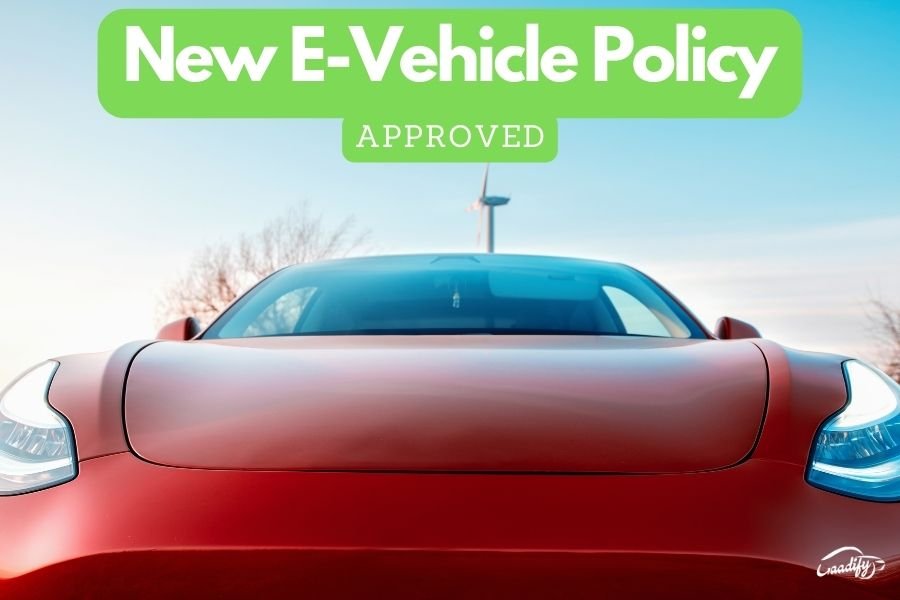
The central government has finally approved a new EV policy (e-vehicle policy) to make India the biggest EV manufacturing hub. This policy eases the import of EVs into the country at significantly lower import taxes, subject to certain conditions. At present, the high import taxes prevent global EV makers from entering the Indian market as it will make the products way more expensive for their target customers.
Core Components of India’s New EV Policy
As mentioned above, the global EV companies can benefit from the reduced import taxes only upon compliance with the following conditions: –
- Participating companies must establish manufacturing facilities in India within three years and start commercial production of EVs. They have to invest a minimum of Rs 4150 crore (roughly $500 million), with no upper limit.
- Companies will have to ensure at least 25 per cent localisation by the third year and 50 per cent by the fifth year.
- The EV being imported must have a minimum CIF (cost + insurance + freight) value of approximately Rs 28.99 lakh (USD 35,000).
- Under this incentive scheme, companies will have the opportunity to import a maximum of 8,000 units of their EVs per year.
- A bank guarantee should back up the company’s investment commitments in lieu of the customer duty forgone. If the company fails to meet the minimum investment requirements as specified in the scheme guidelines, the bank guarantee will be enforced.
- Companies whose credentials have been evaluated for selecting applications under this scheme will be prohibited from reducing their shareholdings (directly or indirectly) during the scheme’s duration.
- If a manufacturer gets approval from the Ministry of Heavy Industries (MHI), invests with a bank guarantee, and commits to meeting other criteria within the specified timeframe, they will qualify for importing their EVs at a reduced import tax rate of only 15 per cent. For reference, the import tax for Completely Built Units (CBUs) stands at a distressing 100 per cent, making it challenging for companies to sell an adequate number of their imported products in India.
- The duty not paid on all the EVs allowed for import would be capped at either the investment made or Rs 6,484 crore (equal to the incentive under the PLI scheme), whichever is less. If the investment is USD 800 million (over Rs 66,000 crore) or more, up to 40,000 EVs in total, or 8,000 per year, would be allowed.
Also Read: VinFast VF3 Electric Mini SUV, Design Patent Filed In India
Welcoming Tesla’s Potential Entry
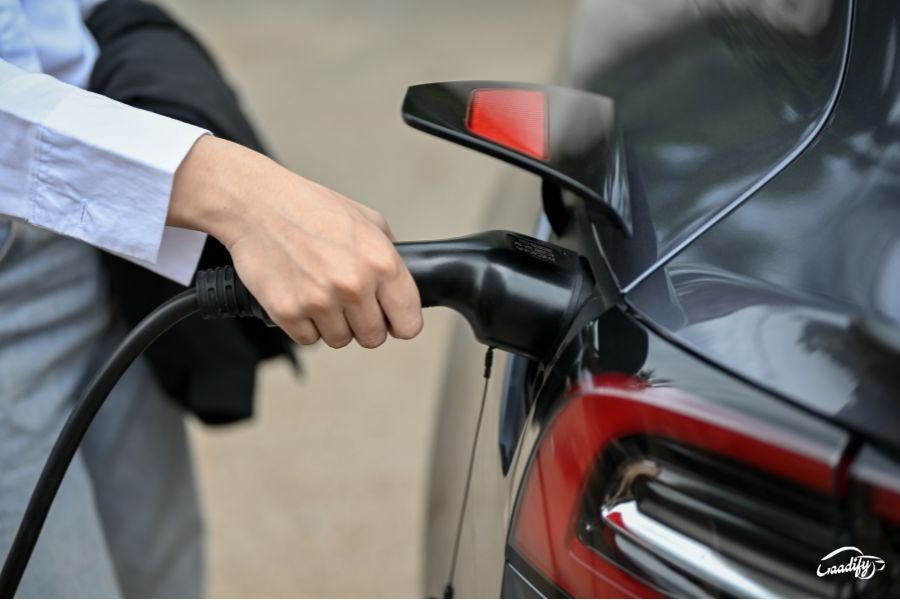
American EV giant Tesla has already expressed interest in entering the Indian market but has faced challenges due to high import tariffs. Now, with this new EV policy, Tesla may proceed with its India plans if it meets the criteria. The Vietnamese auto manufacturer VinFast can also benefit from this policy, which is already working on setting up a local manufacturing facility in the country.
Must Read: Tesla Is Serious About Establishing Production in India; Jio In Talks