
The issue of ethanol blending in petrol has not yet fully settled; the government has now announced its plan to blend bio-CNG (Compressed Biogas) with CNG. The Union Cabinet has approved the GOBARdhan National Circular Bioenergy Scheme, with a total outlay of Rs 23,731 crore, under which Compressed Biogas will be established as a major pillar of India’s future energy mix.
Bio-CNG Blending Targets
The government has made it compulsory for gas companies to gradually blend Bio-CNG into CNG for transport and PNG for domestic usage. That said, the following mandatory targets have been set for blending: –
- 3% Bio-CNG blending by FY 2026-27
- 4% blending by FY 2027-28
- 5% from FY 2028-29 onwards
This phased target for Bio-CNG blending will not only ensure steady demand for domestically produced Bio-CNG and encourage companies to invest in new production plants, but will also support rural income and national economic value by transforming the country’s abundant agricultural residue, cattle dung, press mud, municipal organic waste and other biomass resources into clean fuel.
As of now, India has 1752 registered biogas plants, of which 1286 are currently functional.
Also Read: Diesel Cars May Also Run On Ethanol Blend Too – Here’s What It Means


Worth Exploring: E22, E25, E27 and E30 Fuels Exempted From Double Excise Duty, Here’s The Reason
What Does It Mean For CNG Vehicle Owners?
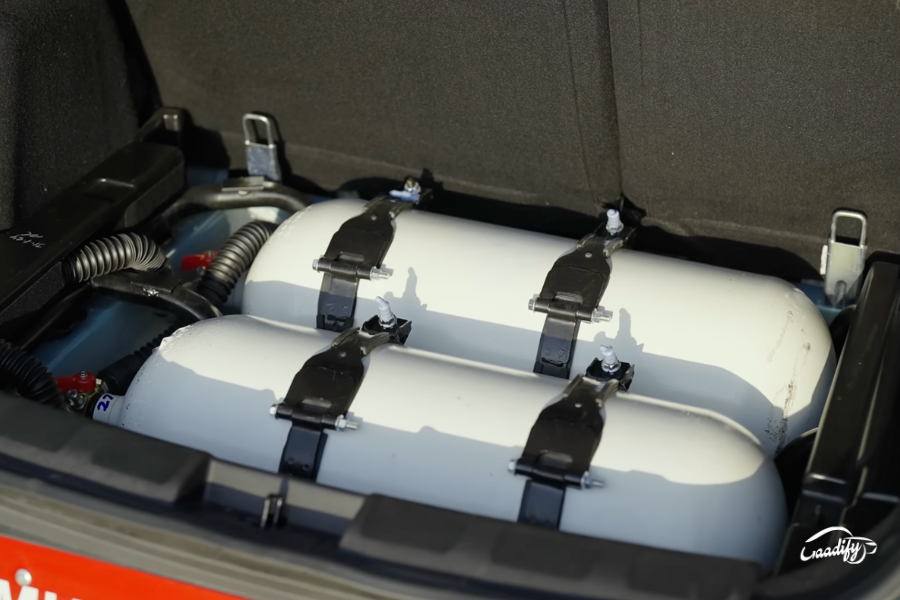
Since Bio-CNG’s chemical profile closely matches that of natural CNG, no changes in the vehicle will be required to run on such blended CNG fuel. In simple words, the existing CNG models will be able to run on this Bio-CNG-blended fuel without any modification or issue to the engine, tank and fueling system.
Government Promises Support to Bio-CNG Producers
The GOBARdhan scheme incorporates several financial and policy measures aimed at attracting private investment and mitigations rusks for companies producing Bio-CNG. These include: –
- Guaranteed Buyers: The mandated blending ensures that gas companies (CNG/PNG suppliers) will buy and mix Bio-CNG, meaning the CBG producers will always have buyers available for their products.
- Stable Pricing: The government has fixed a price for Bio-CNG (Rs 2110 per unit) for around 10 years. This will help producers know how much they will earn.
- Financial Support: The government will financially support both new and existing Bio-CNG (CBG) plants to make them easier to set up and expand their capacities. According to the press release by the ministry, new plants, with 1 ton of Bio-CNG production per day, can get up to Rs 2 crore in support.
- Pipeline Infrastructure: Govt will build pipelines to transport Bio-CNG to City Gas Distribution networks.
- Credit Guarantee Support: This will help small businesses (MSMEs), women entrepreneurs and first-time developers to get loans from banks, and the government will share risk with the lender.
- Ecosystem Fund: The govt will build a supporting ecosystem, which will include feedstock resource assessment and mapping, feedstock aggregation infrastructure, district-level CBG development planning, technology adoption, process improvement, value addition of organic manure, capacity building and stakeholder awareness.
Worth Exploring: India Sets Standards For E22 To E30 Petrol-Ethanol Blend
Author’s Take
Being a renewable fuel, the locally produced Bio-CNG offers several benefits, such as enhancing the nation’s energy security, generating clean energy, reducing air pollution and boosting rural India’s economy. Unlike E20, it doesn’t adversely affect vehicle performance or mechanical components. However, the government must ensure that it doesn’t trigger the same debates regarding compatibility that arose with E20. This requires greater transparency and communication with the people.
Also Read: