After making E20 fuel (petrol with 20% ethanol) mandatory across the nation, the central government has now issued a notification on new fuel standards for petrol blended with up to 30% ethanol, reflecting the government’s eagerness to even higher ethanol blends. The move follows the recent draft amendments to recognise E85 and E100 fuels under the Central Motor Vehicles Rules.
- Published by the Bureau of Indian Standards (BIS) in the Gazette of India, the notification listed technical specifications and quality parameters for E22, E25, E27 and E30 fuels under IS 19850:2026.
- It doesn’t mean that the E30 petrol is now available at fuel pumps yet. Instead, it establishes a technical and regulatory framework for future adoption.
- In addition to E30 fuel specifications, BIS has also notified revised standards for Dimethyl Ether (DME)-blended LPG and other industrial specifications.

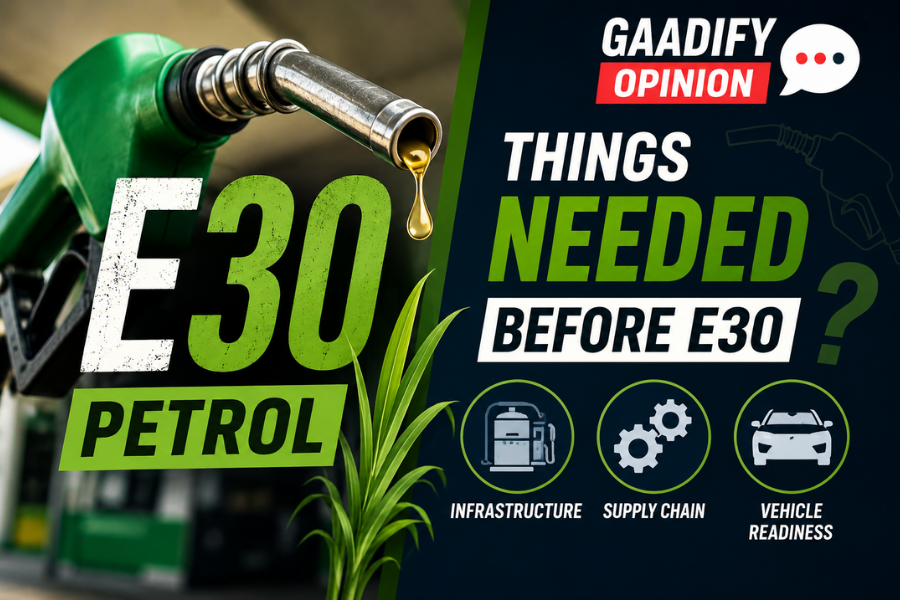
Gaadify Opinion – Things Needed To Be Done Before The Introduction of E30 Petrol?
- As of now, oil marketing companies are required to invest in dedicated storage tanks at fuel pumps, along with separate dispensing infrastructure and necessary changes & adjustments within the supply chain.
- The government also needs to ensure nationwide consistency in fuel supply before the roll-out of higher-ethanol blended fuel.
- Since ethanol is corrosive in nature, auto manufacturers also need to redesign and calibrate specific components of engines & fuel supply system.
- While E20-compliant vehicles can handle ethanol blends up to 30% (E30) without any major issue, apart from a drop in fuel efficiency, the government still needs to ensure the availability of a wider range of fuel options, including lower ethanol blends, so that owners of older vehicles can continue using them. This is mainly because older vehicles, which were not designed for higher ethanol blends, may face issues such as material degradation, corrosion of fuel system components and compromised long-term reliability. This will prevent operating challenges for existing vehicle owners while the ecosystem gradually evolves to higher ethanol blends.
- Ethanol is a renewable fuel derived from plant-based sources, and it helps reduce dependence on imported crude oil. But since it has low energy density compared to petrol, a higher ethanol blend can lead to a drop in fuel efficiency, thus requiring more frequent refuelling. That said, to offset this impact, the government should promote highly fuel-efficient strong-hybrid vehicles by providing attractive incentives on them, like lowering GST rates or waiving RTO registration fees for their wider adoption. By this, the government could ensure a right balance between long-term environmental benefits, energy security, and user convenience & on-ground practicality.
Related: Ethanol Blended Petrol Controversy in India: Impact, Concerns and Solutions Explained