Saturday, June 13, 2026

What Are Paddle Shifters And How Do They Work?

Automatic transmissions are slowly coming up in terms of popularity, may it be because of their paramount convenience over manual transmissions or the fact that it has a lesser learning curve, they are on the come up and they are coming fast!

How convenient as it may be, it takes a lot of control away from the driver, and it can get rather frustrating in cases where you want your car to upshift or downshift but you can’t really do it. Here is where paddle shifters come in, a technology that started out majorly in supercars has now made its way into Honda, Kia, and now Maruti Suzuki’s cars. Let’s see what paddle shifter technology actually is and how it can help provide that control back to your hands while retaining the convenience of an automatic.

Also Read: Tata Punch, Nexon, and Altroz iTurbo To Get DCT Automatic Transmission Soon

What are paddle shifters?

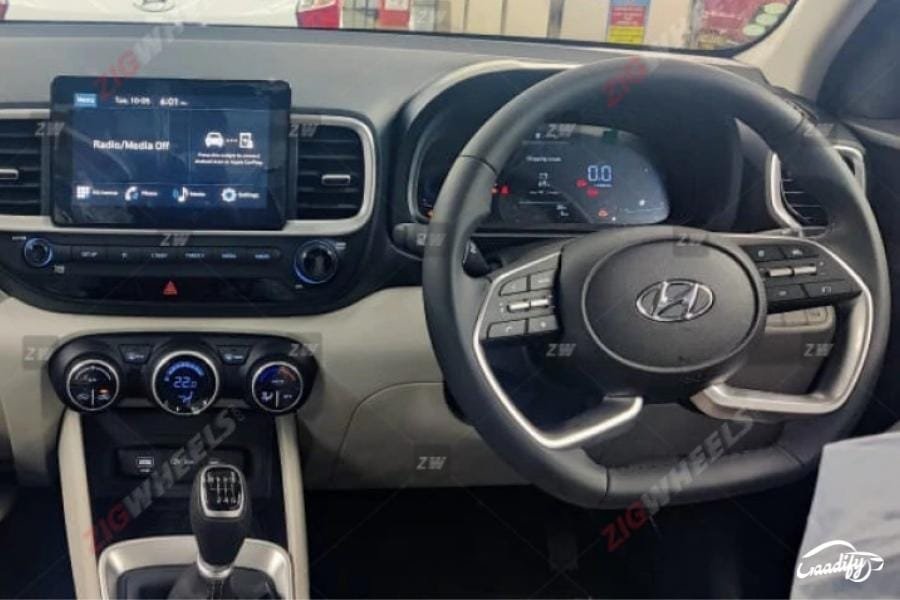
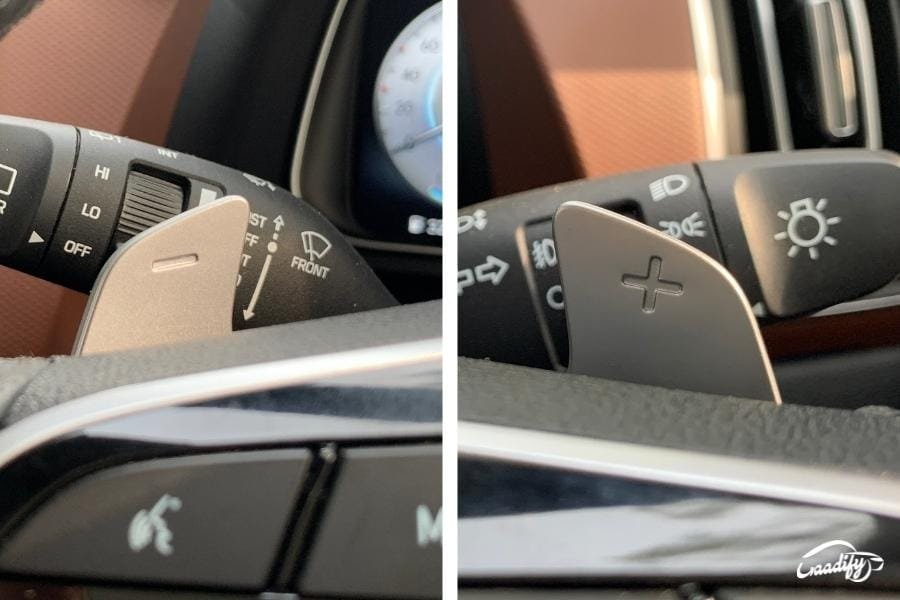
Paddle shifters are nothing but little buttons placed on the back of your steering wheel, which can actually trigger the actuators responsible for upshifting and downshifting in an automatic transmission. 

How do paddle shifters work?

If you’ve ever driven or owned an automatic transmission like AMT, DCT, or torque converter, you would know that they have a manual mode in which you can flick on the gear shifter and then take manual control of upshifts (although downshifts still happen automatically). Paddle shifters work on the same principle but are just now placed at the back of your steering wheel for better convenience.

In most cases, the right shifter is responsible for upshifts, and the left shifter is responsible for downshifts, but nowadays both can be used for performing upshifts and downshifts.

In a world shifting towards the convenience of automatics, paddle shifters still offer that sense of control, and although not a full-fledged manual, having control of our upshifts and having the ability to downshift for a quick overtake is a welcome ability!

Car News

Tata Sierra 1.5 NA petrol review

7 Things We Learned About Tata Sierra 1.5 NA Petrol Variant After Driving

0
The iconic Tata Sierra nameplate made its comeback in late 2025, with prices starting ranging between Rs 11.49 lakh and Rs 21.29 lakh (ex-showroom)....

Skoda Kodiaq RS Bookings To Commence On June 22; Here’s Why The Hype

0
Skoda India will commence bookings for the upcoming Kodiaq RS on June 22, ahead of its launch in the following weeks. It will be...
2026 Tata Tiago EV running cost

Tata Tiago EV 24 kWh Real-World Range Test

0
The recently updated Tiago EV is Tata's most affordable electric vehicle available in India. The upgraded hatch comes with a new exterior design, modern...
Kia cars discounts in June 2026

Save Up To Rs 1.5 Lakh On Kia Cars In June 2026

0
Kia India has rolled out offers and discounts across most of its models in June 2026, including the Sonet, Seltos, Carnival, Carens Clavis and...

Related Articles

Tata Cars To Get A Price Hike From July 2026

Tata Motors has announced a price hike across its ICE and EV lineup by up to 1.5% from July 1, 2026. The brand has...

Honda Unveils 2026 Flagship Bikes: Fireblade SP, Gold Wing; CB750 Hornet and XL750 Transalp Gets E-Clutch

Honda Motorcycles & Scooter India has expanded its premium motorcycle portfolio with the addition of Honda's E-clutch technology on its 755cc models: the CB750...

Honda ZR-V Hybrid: Engine Specifications, Mileage and Features Revealed

Honda Cars India has recently unveiled the ZR-V hybrid SUV for the Indian market, alongside the launch of the new City facelift. Bookings for...

All ADAS Levels Explained: Level 0 to Level 5

In the last few years, cars with ADAS tech have gained significant traction among buyers, due to the convenience and safety they offer. However,...

E22, E25, E27 and E30 Fuels Exempted From Double Excise Duty, Here’s The Reason

The central government of India has announced exemption of the excise duty on the higher ethanol blended fuels beyond E20, such as E22, E25,...