TVS Motor Company is one of India’s leading two-wheeler EV manufacturers. It has three electric vehicles on sale in the country, with the TVS Orbiter being the latest addition. Positioned as an affordable commuter, the Orbiter is positioned below the iQube in the brand’s EV lineup and aims to strike a balance between comfort, practicality and features. But how well does it deliver in real-world conditions? We put it to the test to find out.
Unique Design with Good Finish
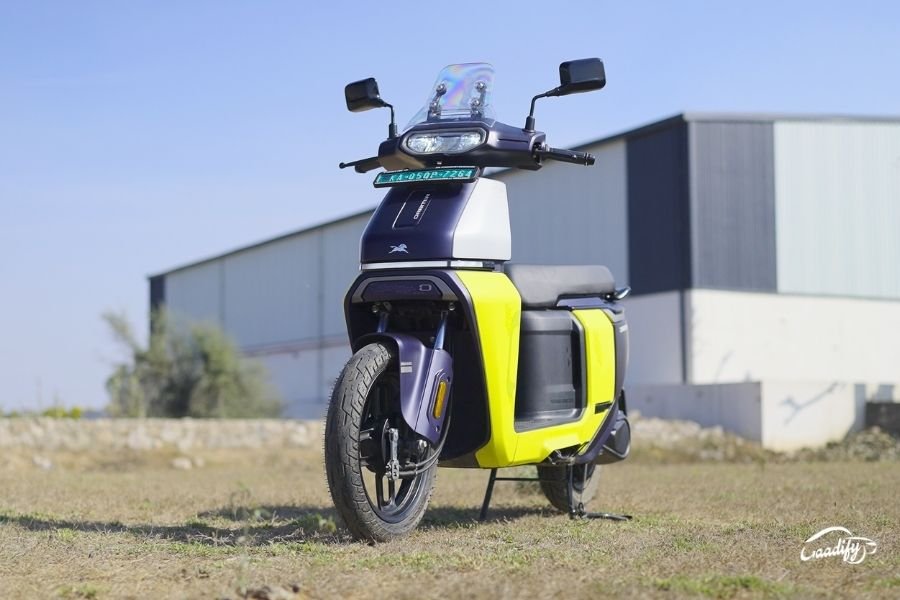
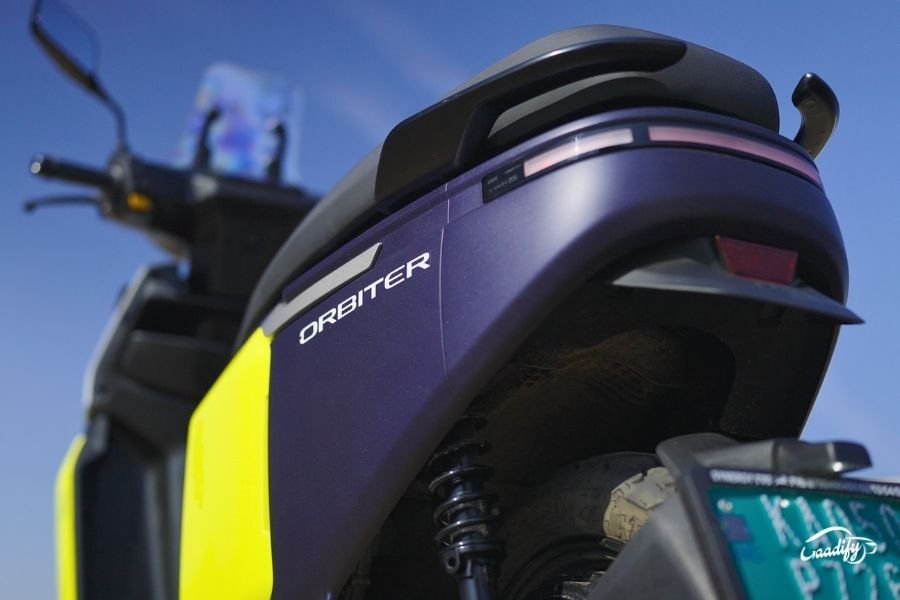
Unlike the TVS iQube, which has a conventional scooter design, the Orbiter looks upright & boxy, with a very unique, youthful styling that is further complemented by six vibrant colour options.
It has a minimalistic front with neatly tucked LED DRL strips on the apron featuring integrated indicators. The headlamp unit is also LED, and a big transparent flyscreen sits upright in the front. Rear lights are also connected, and the neat tail section that will remind you of the Ather Rizta. The overall fit & finish is also not something to complain about.
Overall, the Orbiter has a fresh and modern appearance that certainly draws people’s attention on the road and that in itself is a big statement in today’s crowded EV space.
Sensibly Loaded, But Not Executed
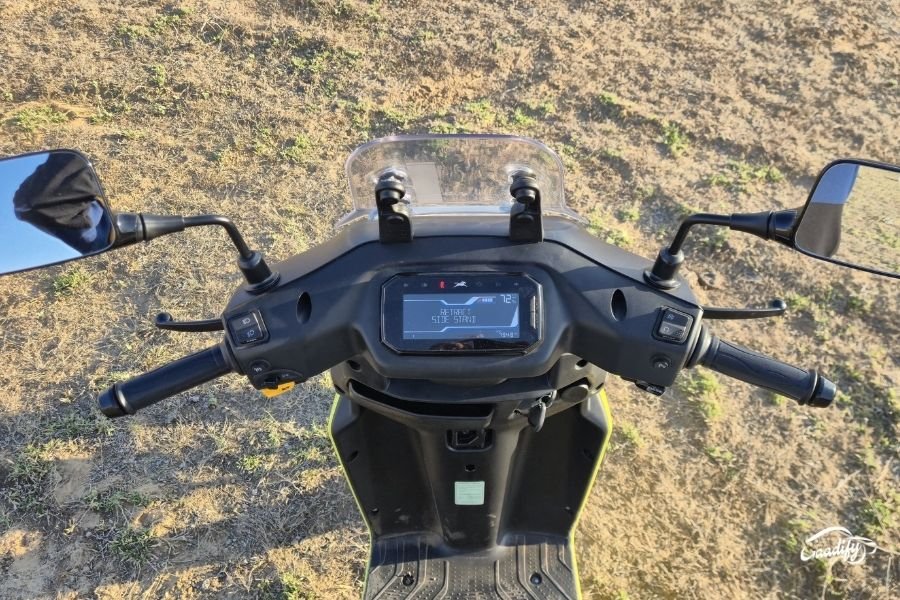
What I really like about the Orbiter is TVS’s straightforward approach in the features department. Having said that, it skips gimmicky additions and focuses largely on practical amenities. It gets a 5-inch non-touchscreen LCD cluster with Bluetooth connectivity via the SmartXonnect app for features like call alerts and turn-by-turn navigation assist. It also gets connected features for remote monitoring of the vehicle status, live location tracking, and OTA updates.
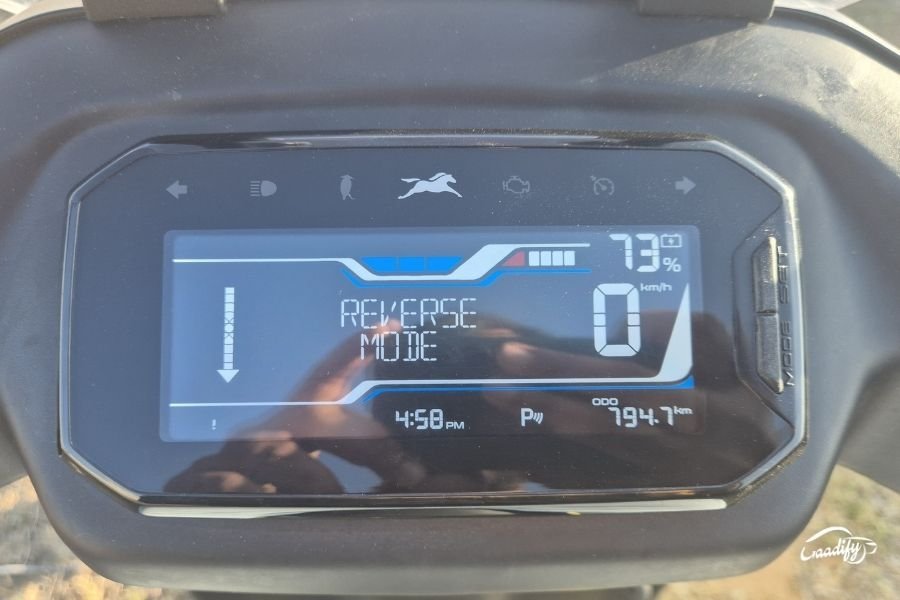
Additionally, there is also a USB charging port, parking brake lock clasp, two riding modes (Eco & City), hill hold assist, reverse assist, regen braking and cruise control. However, the cruise control isn’t very practical on most Indian roads. Also, its usage is very limited because it can only be activated above 23 kmph, but cannot be engaged above 40 kmph in Eco mode and 60 kmph in City mode. On the other hand, the hill hold only activates when you press the brake levers for a few seconds. We have seen the Ather Rizta and 450 Apex, which has set a benchmark when it comes to cruise control and the hill hold feature for their easy usability in everyday usage scenarios.
Also Read: Ather 450X Gets Cruise Control Via OTA Updates
Lightweight and Easy To Use
Tipping the scale at 112kg, the TVS Orbiter is quite light, making it easy to manoeuvre even in tight spaces. This is further complemented by the seat height of 763mm, which makes it fairly accessible even for shorter riders. However, the icing on the cake is its 290mm wide flat footboard, upright handlebar and the placement of the battery below the seat, which makes it very comfortable for taller riders compared to Ather Rizta’s elevated setup. It also has a spacious 845mm flat seat, which is generously wide and can easily accommodate two occupants (including rider).
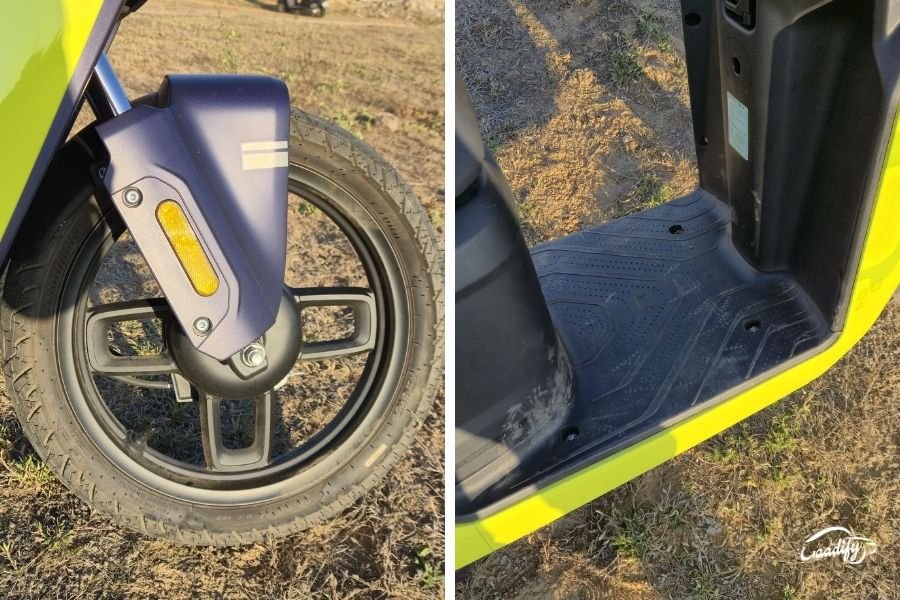
The scooter uses a 14-inch front and 12-inch rear wheel setup, wrapped with 90-section tyres at both ends. The larger front wheel and 165mm of ground clearance ensure you go over potholes and bumps effortlessly. The drum brake setup provides adequate stopping power for a scooter of this performance level.
Overall, the scooter feels agile, offers a relaxed riding position & the ride quality is comfortable, making it a good companion for city traffic.
Ample Storage Space
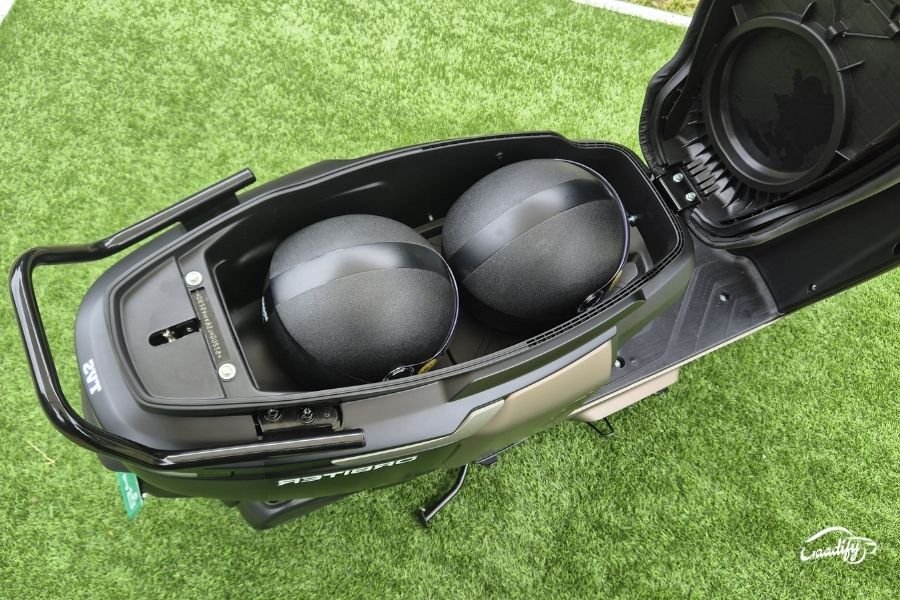
The Orbiter gets a healthy 34 litres of underseat storage, which makes it quite practical in the real world conditions for carrying tiny stuff, a laptop bag, groceries or even two half-size helmets. But since its battery pack is placed under the rider’s seat section, the storage area is not as deep as other scooters in the segment, like Ola S1 range or Ather Riztza. Also, a boot light would have further increased the overall accessibility at night.
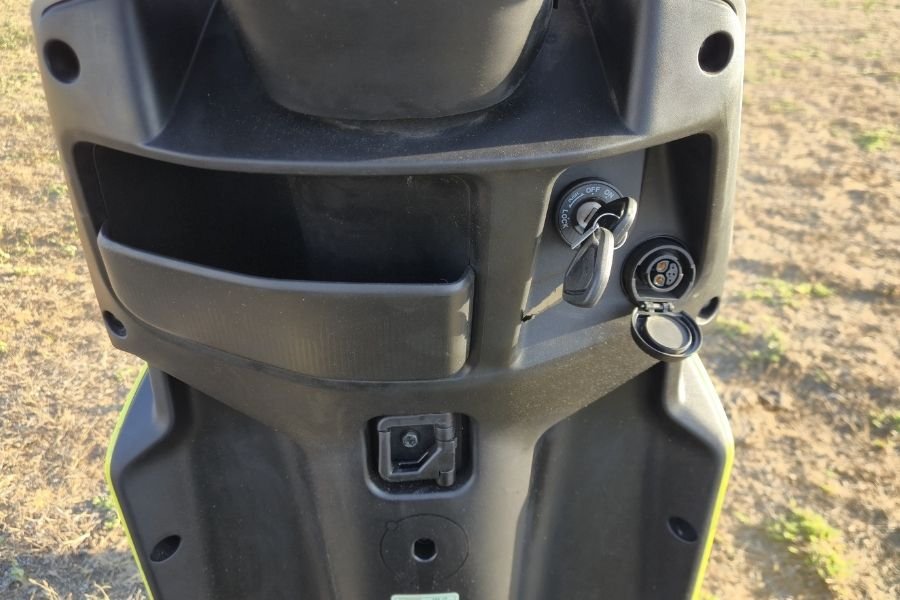
The scooter also gets a bag hook with a 3kg capacity in the front apron, along with a deep open utility box where you can put your mobile phone or wallet while riding without worrying about them falling out.
TVS Orbiter: Performance and Real-World Range
The Orbiter comes with a 3.1 kWh battery pack, paired with a BLDC hub motor producing 1.8kW nominal and 2.5kW peak power. While the power figures feel quite low, it gets a smooth and linear throttle response, good enough for city riding conditions. But do not expect any outright performace from it. In fact, the throttle response is largely the same in both riding modes; the only major difference is the top speed, which is limited to 45 kmph in Eco mode and 68 kmph in City mode. However, one thing that deserves appreciation is its extremely silent motor, which adds to the overall riding experience.
Speaking of the range, it claims an 158km IDC figure, but the real-world indicated range after a full charge is 115km in Eco and 97km in City mode. A gentle ride without a pillion in city conditions can offer you over 100km range in actual usage. Keep in mind that aggressive throttling can drop these figures substantially.
Regarding charging, it takes roughly 4 hrs 10 min to juice up its battery pack from 0 to 80%.
TVS Orbiter: Pros and Cons
| Things I Like | Things Could Have Been Better |
| Offers perfect riding position to taller riders | Limited top speed; lacks punch |
| Skips gimmicky features | Limited usage of cruise control |
| Decent real-world range | Performance in City mode is not much different from Eco mode |
| Silent motor and smooth performance | No touchscreen |
| Comfortable ride quality |
TVS Orbiter Price and Verdict
Priced at Rs 92,519 (on-road Delhi, after PM e-drive and state subsidies), the TVS Orbiter offers a good value. It emphasises comfort, practicality and ease of use rather than outright performance.
With its decent performance, a lightweight build and easy manoeuvrability, we believe it is a good option for female riders or beginners upgrading from an ICE scooter. Overall, it’s a decent choice for new riders and short urban trips. Performance-focused riders may find it underwhelming.
Related: Battle of Electric Scooters: TVS Orbiter vs Ather Rizta vs Vida VX2