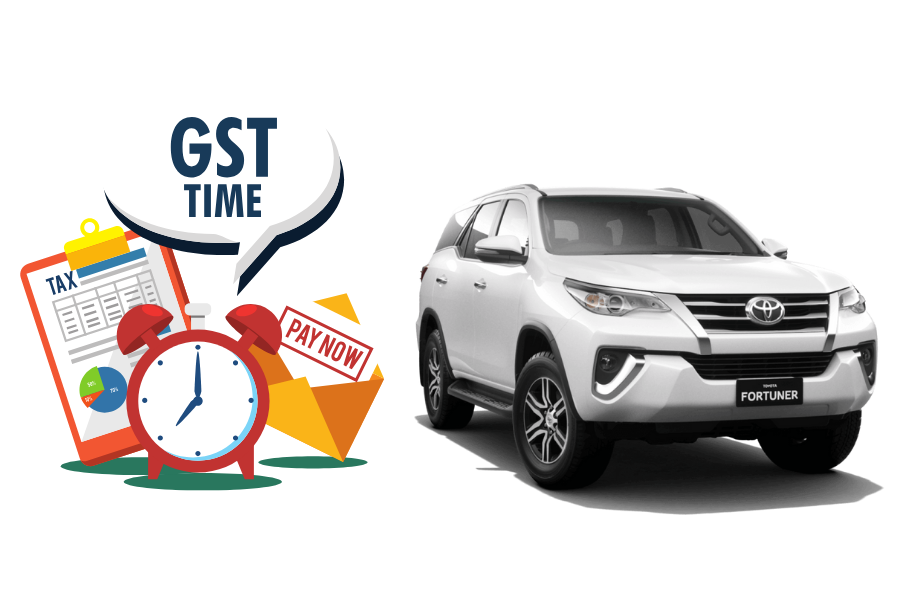
Car buyers in India could be in for a festive treat this Diwali as the central government prepares to overhaul the Goods and Services Tax (GST) structure on automobiles. The Union Government is reportedly contemplating a significant tax rate cut, with GST on small cars and two-wheelers likely to be reduced from 28% to 18%, under the proposed new regime. This move is aimed at making mass-market vehicles more affordable and reviving demand in entry-level and compact car segments, which have been under pressure due to rising prices and subdued consumer sentiment.
Two-Tier GST Structure Proposed
Currently, GST operates on four slabs—5, 12, 18 and 28 per cent. Under the new proposal, this will be replaced by a two-tier structure:
- 5% GST on essential items.
- 18% GST on most other goods and services, including cars.
Luxury goods such as high-end cars, tobacco, and alcohol may fall under a separate 40% tax bracket.
As of now, most passenger vehicles attract a 28% GST rate, with additional cess varying by engine capacity and vehicle type—sometimes pushing the total tax incidence close to 50% for larger cars and SUVs. Under the proposed GST reforms, small cars (under 4 metres/1,200cc for petrol and 1,500cc for diesel) and mainstream two-wheelers could see their GST rate fall to 18%, translating into potential savings of 5–8% for buyers. For example, a popular hatchback such as the Maruti Swift, currently priced at around ₹8 lakh, might become cheaper by ₹40,000–₹60,000 after the new GST rates take effect.
Bigger Cars May Fall Under 40% Tax Slab
While the biggest gains will be for small cars and two-wheelers, bigger cars and luxury vehicles may be merged into a new 40% GST bracket, replacing the current GST-plus-cess structure.
Insurance Premiums Could Get Cheaper Too
The reforms are also expected to rationalise GST on insurance premiums, including motor, health, and life insurance, from 18% to 5% or even zero, reducing the overall cost of vehicle ownership.
For car buyers, this could mean direct savings. For example, a motor insurance premium of ₹20,000 per year may be reduced by about ₹2,600 if GST is cut to 5%.
When Will It Be Implemented?
These proposals form part of a larger drive to simplify the GST regime into a two-slab system, aiming to bolster the automotive sector and stimulate the broader economy. The GST Council is set to review and potentially approve these changes before Diwali 2025. If cleared, this festive season could see a surge in car sales as buyers rush to take advantage of the reduced prices—making Diwali 2025 one of the best times in years to purchase a new vehicle in India.
Also Read: FASTag Annual Pass: Everything You Need To Know About