We recently got a chance to drive the new-generation Renault Duster, which has made a much-anticipated comeback to the Indian market. While we have already shared our first impressions via an Instagram post, a detailed video couldn’t be shot due to unfavourable weather conditions. That said, based on our initial drive experience, here’s what the new Duster brings to the table.
| Strengths | Weaknesses |
| – Mighty 1.3-litre turbo-petrol engine – Outstanding riding quality and dynamic character – Premium cabin, rightly loaded features – Excellent pricing – Established brand name | – While diesel is a big miss, the hybrid isn’t offered right from the launch – No option for naturally aspirated petrol and CNG – Not as spacious as the Kia Seltos and the Tata Sierra – Lack of an AWD setup raises questions over its core USP – Faces intense competition and India’s herd-buying mentality |
Different From Global-Spec Duster
- The appearance of a car is obviously the first thing that every buyer notices, and the new-gen Duster certainly makes a statement.
- At first glance, you can see a few familiar elements that remind you of the old Duster, but this is an all-new design that strikes a perfect balance between modernity and nostalgic retro charm.
- Interestingly, it also differs from the Duster sold in global markets, giving the Indian-spec version its own identity.
- To start with, the India-spec Duster is based on the Renault Global Modular Platform (RGMP), whereas the European-spec trim underpinned the brand’s Common Module Family – B (CMFB) platform.
- This modified platform also features a new electrical and electronics (E&E) architecture called SWEET400, co-developed with Google.
- The RGMP can also underpin sub-4m cars and can even support powertrains like hybrid, CNG and even full electrification (EVs), without much compromising on packaging.

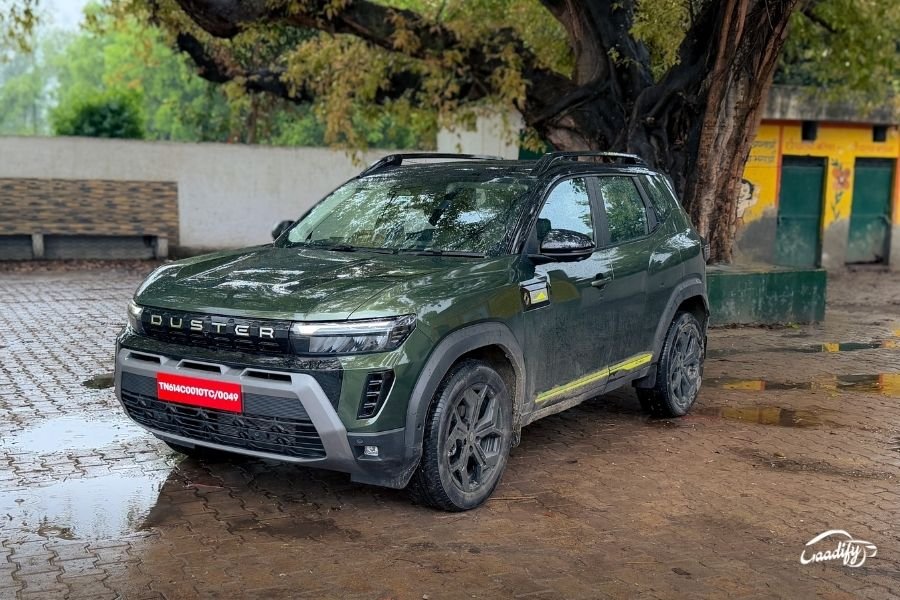
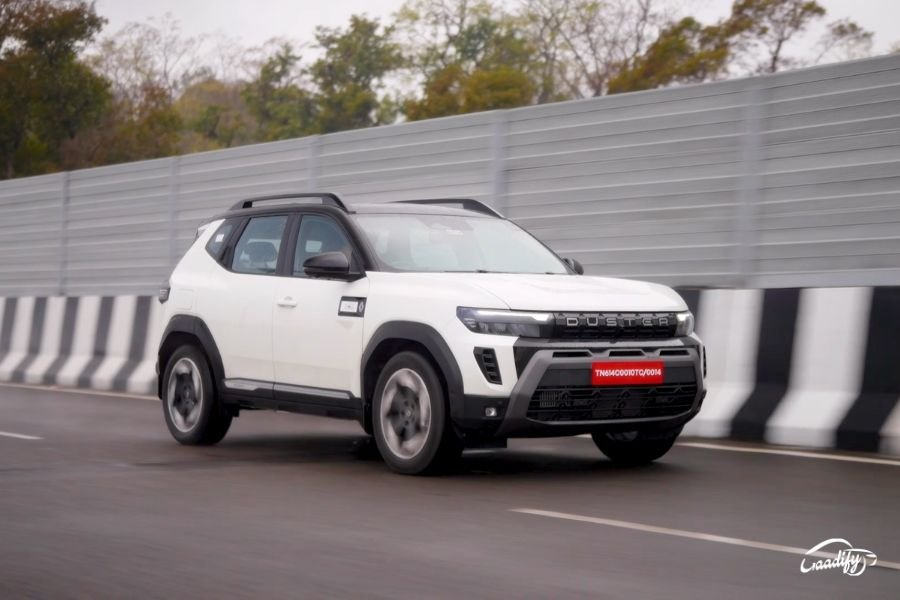
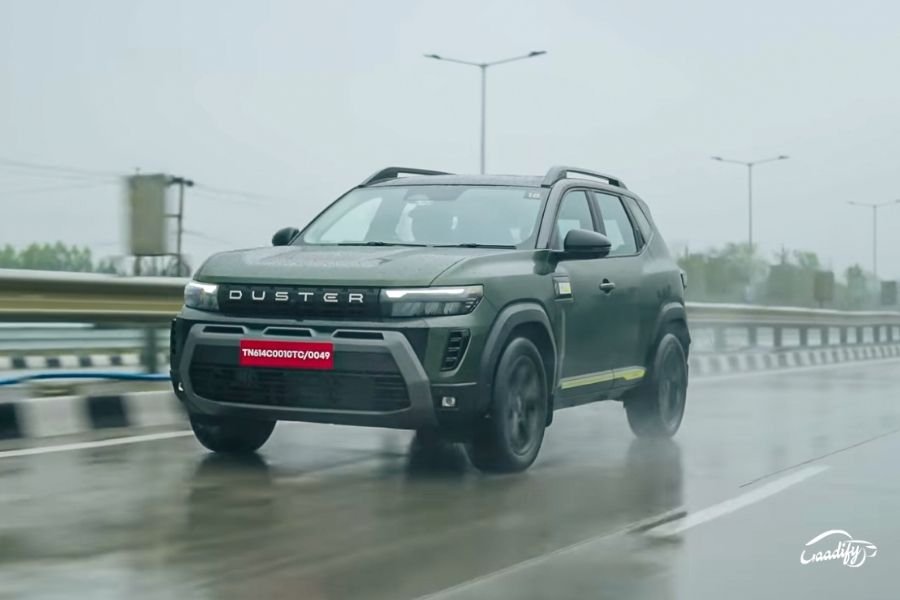
- Coming back to the styling, the design works quite well up front, and the SUV looks bold & muscular.
- It comes with a large LED headlamp setup featuring eyebrow-shaped DRLs that also double as turn indicators.
- The grille, too, is unique to the Indian-spec trim, featuring bold “DUSTER” badging instead of RENAULT lettering in the global-spec trim. And interestingly, we haven’t seen any car in decades without a brand logo up front.
- Anyways, the protruding silver skid plate will remind you of the first-gen model. It provides the SUV with a solid road presence. Adding to it are the large air curtains in the bumper, pixel-style fog lamps, and sculpted bonnet.
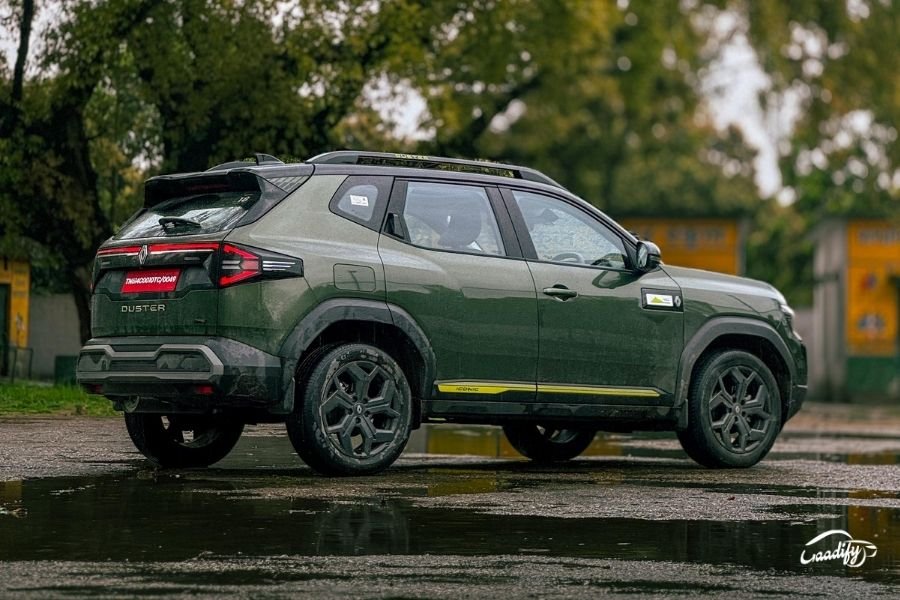
- In profile, its boxy silhouette further accentuates its rugged character. However, things are quite controversial at the rear, especially the black applique surrounding the connected triangular tail lamp setup and the dumbbell-like silver element on the rear bumper, which protrudes rather awkwardly.
- All-in-all, the 2026 Duster looks appealing on the road, something that will undoubtedly turn heads, and its nearly timeless design won’t let you get bored with it.
Numbers That Matter
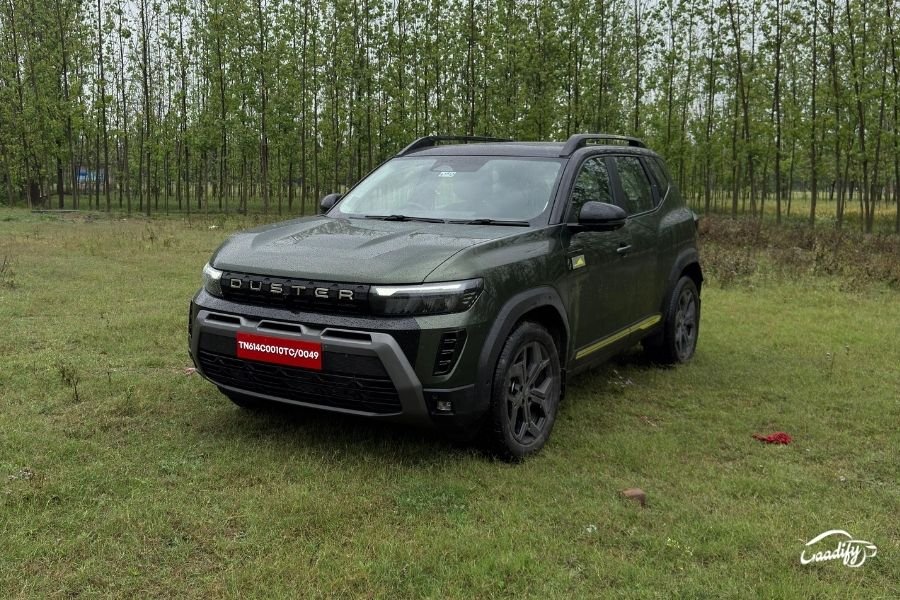
- Against the measuring tape, the new Duster is 4343mm in length, 1813mm in width, 1659mm in height, with a 2657mm-long wheelbase. That’s 47mm more than the segment-leader Hyundai Creta. Tap here to see their detailed comparison based on the price, features, specifications and other parameters. Nevertheless, the new Duster’s dimensions put it in the same ballpark as other mid-size SUVs in the segment; however, the Kia Seltos and Tata Sierra still have an edge in terms of length and cabin space.
- It has a ground clearance of 212mm – good enough for the vehicle of this segment, while the boot space is rated at 518 litres.
- It boasts an approach angle of 26.9 degrees and a departure angle of 34.7 degrees, making it capable of handling the rough terrains and steep inclines with ease.
A Much-Needed Modern Makeover Inside The Cabin
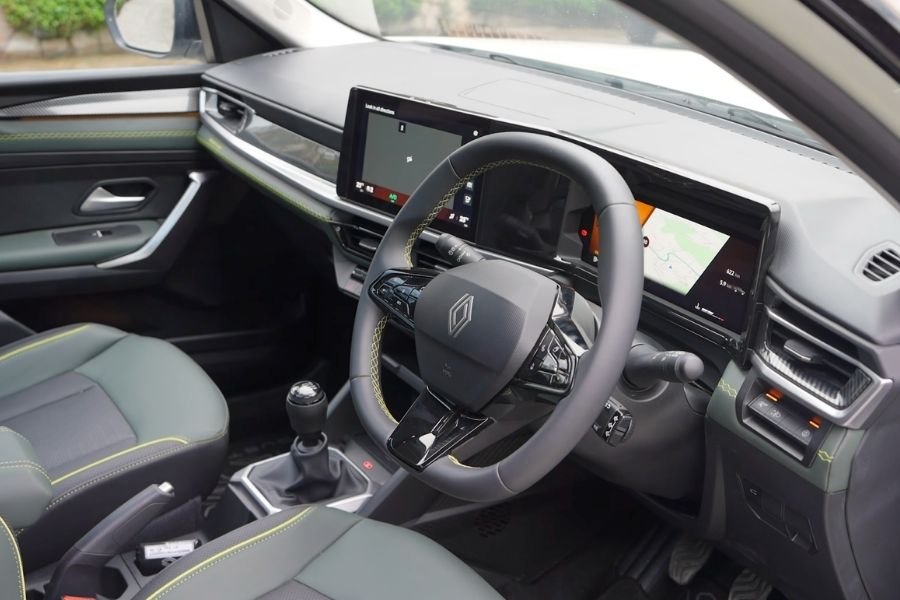
- The interior design of the new Duster is quite impressive and is totally different from the version sold in international markets, something that simply wouldn’t work for our buyers. Thankfully, Renault has understood this and offered a new & more modern interior layout.
- Compared to the previous Duster, which featured hard plastic throughout and had certain ergonomic shortcomings, the new Duster feels quite premium and is largely ergonomically sorted, the only exception being that the audio system controls for the driver, which are positioned on a separate stalk behind the wheel.
- The 2026 Duster uses high-quality hard plastic materials, with piano-black inserts, faux carbon fibre trims and soft-touch leatherette finish on the dashboard and door pads that give it a plush feel.
- Fit & finish levels are good overall.
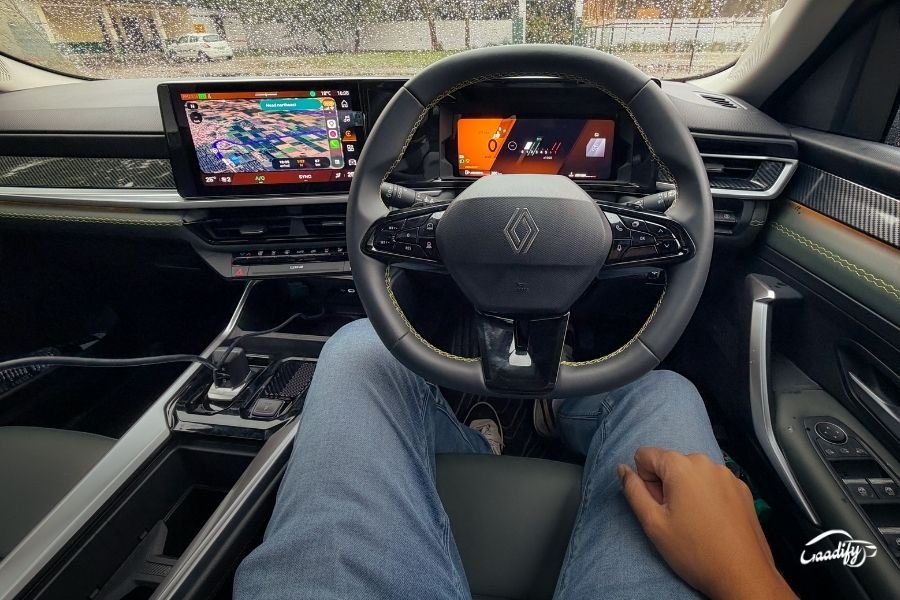
- What I really liked about the new Duster is the perfect blend of screens and physical buttons. It doesn’t feel excessively reliant on touch controls, which is something that most buyers will appreciate in real-world usage.
- Another noteworthy aspect is the difference in design of the centre console between the manual and automatic versions.
- The DCT automatic version features a high-set closed-off panel that houses a wireless charging pad, a stubby gear selector, controls for electronic parking brakes, cup holders and a deep cooled storage section under the armrest.
- On the other hand, the manual version features a lower-set console with a manual parking brake, along with an additional parcel shelf for your tiny stuff just below the physical controls on the dash. Additionally, its Qi2 wireless charging pad has been thoughtfully designed with a sculpted base that neatly accommodates modern smartphones with protruding camera modules. This is a small but very relevant touch.
Google-based OS
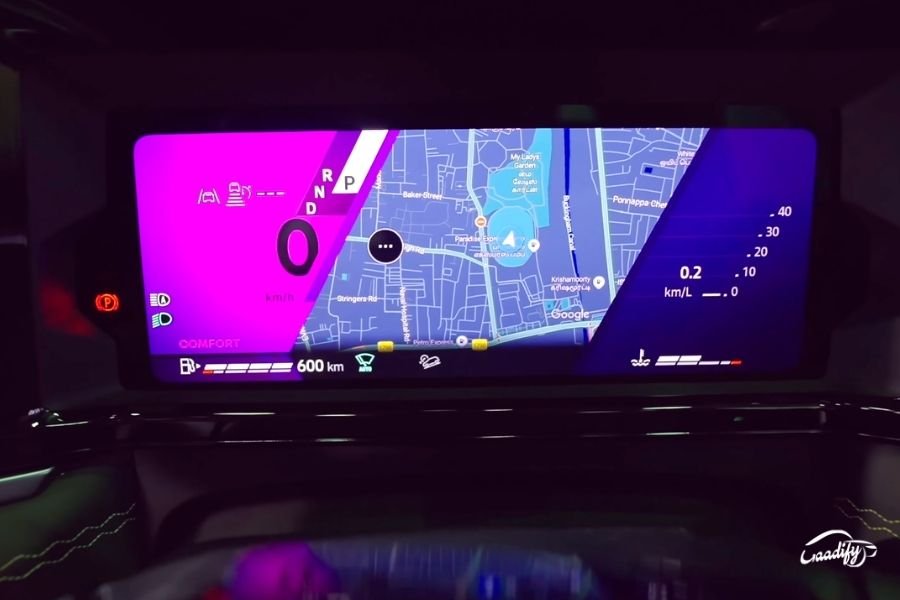
- As mentioned earlier, the Indian-spec Duster features a distinct and more feature-rich electrical architecture compared to the global trim, which is co-developed with Google. This means it offers a more modern experience with a better equipment list.
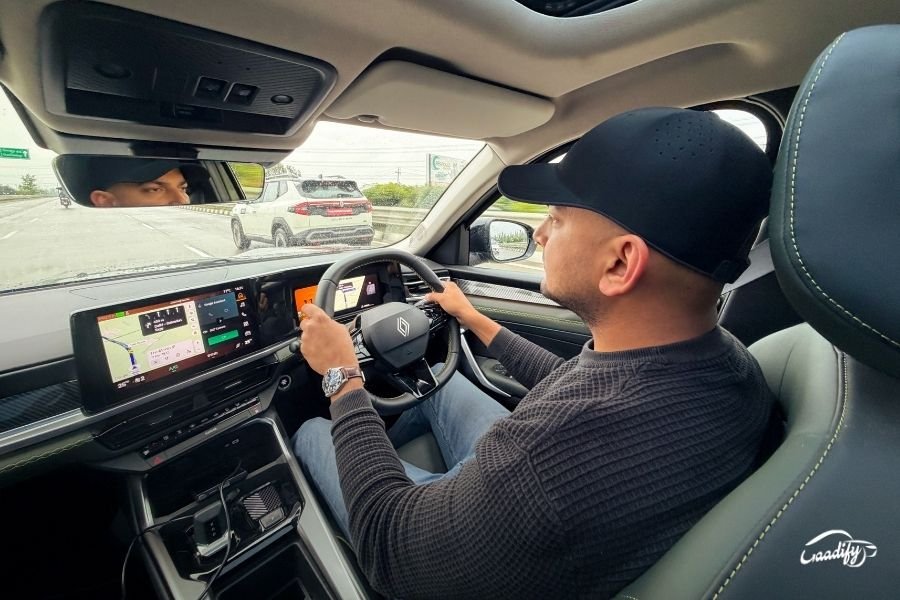
- A Google-based OS means its 10.1-inch infotainment system comes equipped with built-in Google apps like Google Maps, Google Assistant and the Google Play Store. So, you don’t need to connect your phone every time to access Google Maps.
- What’s more interesting is that whenever you start the Google Maps navigation, it automatically gets mirrored onto the instrument cluster.
- In addition, one can also connect their smartphone to the infotainment system via wireless Apple CarPlay and Android Auto.
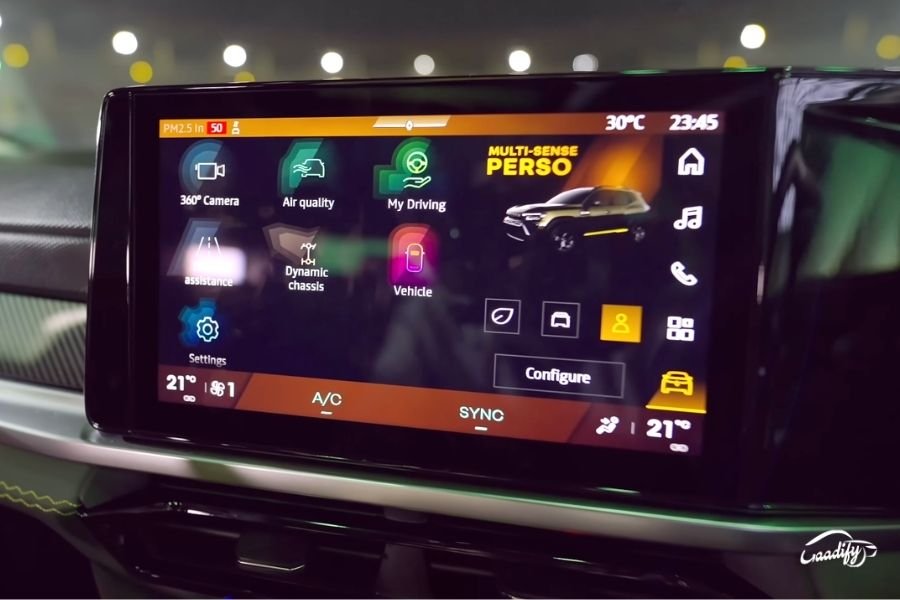
- Speaking of the screens, they are responsive, bright and have crisp graphics. However, the user interface takes time to get used to it.
Well-loaded Cabin
In addition to the 10.1-inch touchscreen infotainment, digital driver’s display and wireless charger, the 2026 Renault Duster also features the following amenities for creatures’ comfort & safety: –
- Keyless entry with push-button start/stop
- Powered tailgate
- Automatic headlamps
- Rain-sensing wipers
- Auto-dimming IRVM
- Powered front seats with a ventilation function
- Manual lumbar support for the driver’s seat
- Connected car technology
- One touch up & down function for all windows
- 6-speaker Arkamys tuned sound system (sound quality fairly basic, a subwoofer would have elevated the game)
- 48-colour ambient lighting
- Panoramic sunroof
- Dual-zone climate control
- Rear AC vents
- Paddle shifters
- Rack-&-reach adjustment for steering wheel
- 360-degree camera (quality isn’t good)
- Tyre pressure monitoring system
- Front & rear parking sensors
- ISOFIX child seat anchors
- 6 airbags
- Traction control
- ESC
- Hill assist
- Level-2 ADAS suite
Renault has also provided a segment’s first dedicated ADAS shortcut button on the right side of the dashboard to engage, disengage or personalise the sensitivity of the ADAS functions.
Overcomplicating the Basics
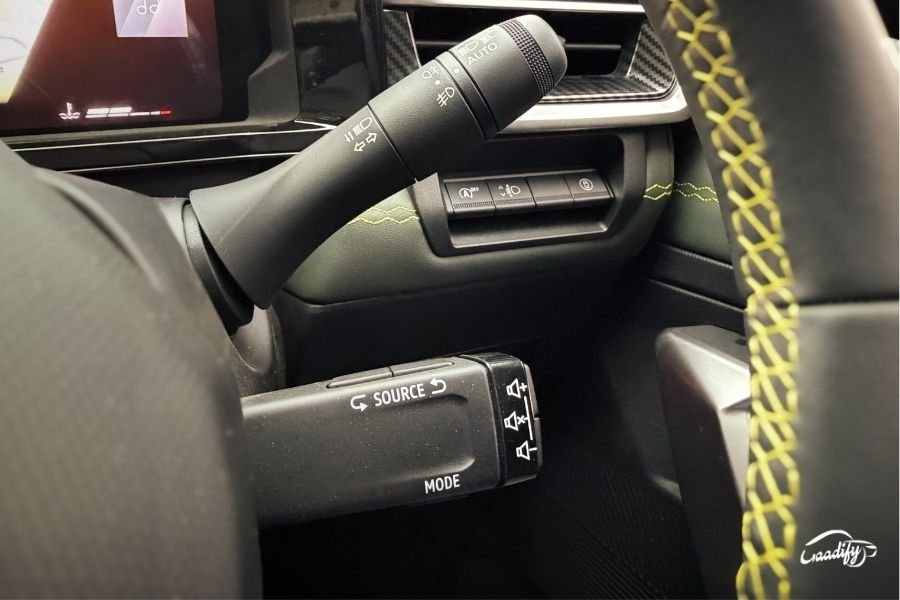
It seems to be a French tradition to make certain things unnecessarily complicated. While this time, the new Duster is largely sorted in terms of ergonomics, featuring physical controls for most functions, which are well within reach, the music controls for the driver have been shifted behind the steering wheel. Instead, a dedicated physical knob should have been offered that could be used by both driver and co-passenger. Furthermore, the brand has also skipped a separate button to change the drive modes; these can only be accessed via the main screen.
YouClip: A Thoughtful Touch
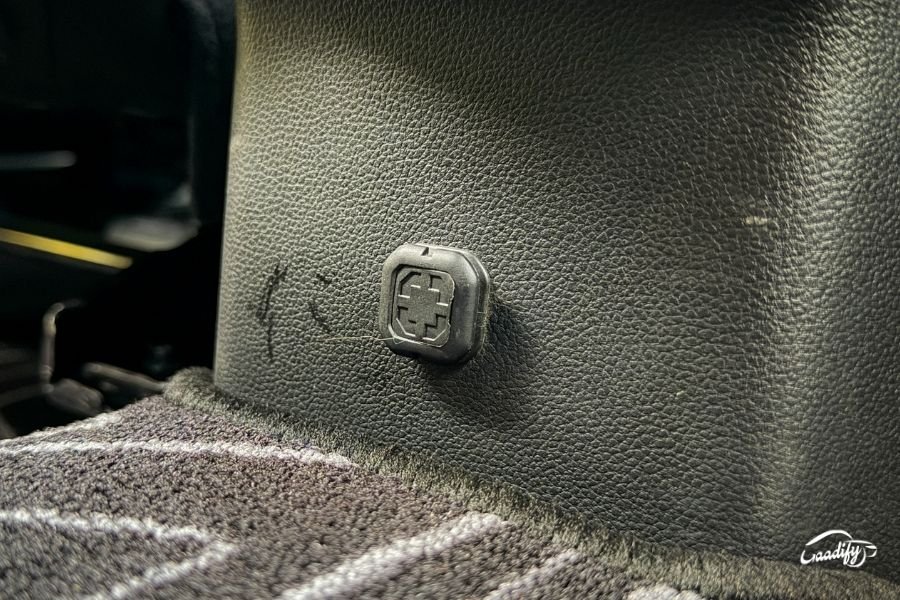
YouClip is an innovative attachment system that allows you to fix specially crafted accessories to enhance the overall practicality of the cabin. That said, the Indian-spec Duster gets two YouClips – one near the floor under the rear AC and one inside the boot. The European-spec Duster gets multiple YouClip points throughout the cabin and boot.
Rear Seat Comfort & Space
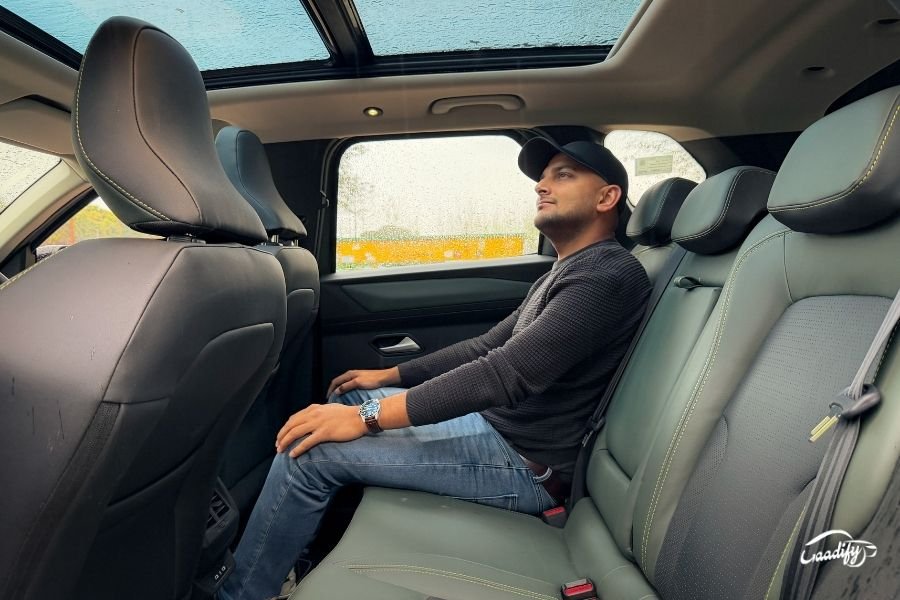
The rear seats are good for two adults, offering ample space for average-sized Indians. However, taller passengers might complain for kneeroom and under-thigh support. Nevertheless, the seats are comfortable, and the backrest has a nice reclined angle, though it cannot be adjusted. It also gets dedicated rear AC vents, charging ports and centre armrest with cup holders for added comfort & convenience. Furthermore, the panoramic sunroof adds a sense of airiness. However, rear sunshades would have further elevated the overall experience.
Best Turbocharged SUV In Its Class
The Duster is available with three engine options: 1-litre turbo-petrol (100PS/160Nm), 1.3-litre turbo-petrol (163PS/280Nm) and a 1.8-litre strong-hybrid petrol (160P/172Nm). Out of these, we had the chance to drive the 1.3-litre version in both manual and DCT automatic guises, and believe me, it truly impressed us with its outstanding performance and superb refinement levels. The turbo kicks in at around 2000-2500 rpm, after which you can experience a strong surge of power all the way till 5,000 rpm. Its wet-clutch dual-clutch automatic (DCT) transmission feels smooth and seamless, making it ideal for both low-speed city driving and highway bashing. In the manual version, the clutch feels light, offers a consistent bite, and the slotting is effortless; however, compared to the automatic, turbo lag is felt more prominently in the manual variant.
Unlike the OG Duster, the 2026 iteration lacks diesel and an AWD option.
Ride Comfort and Handling
Like the first-gen Duster, the new-gen model also sets the benchmark with its extraordinary ride quality. Whether it be broken roads with big potholes, smooth tarmac highways or the unpaved rough terrain of rural areas, the Duster navigates them all without any hesitation. Yes, the suspension feels slightly firm at low speeds, but it won’t make you uncomfortable at any point. At high speeds, it feels stable and composed, the body roll is well controlled, and you don’t lose confidence even at triple-digit speeds.
The steering has the right amount of weight in all modes and offers good feedback. The brakes are reassuring as well.
Final Wordings
Priced between Rs 10.29 lakh and Rs 18.49 lakh (ex-showroom)*, the Renault Duster appears to be a truly impressive package, featuring rugged styling, a modern interior with a long list of features, along with a wide range of engine options. However, the lack of a diesel mill and an AWD setup might disappoint some buyers. Also, it would be interesting to see how Renault has configured its 1.8-litre strong-hybrid engine and what its pricing will be. Nevertheless, for the time being, the 1.3-litre option stands out as an excellent option for those looking for a fresh model with a genuinely fun-to-drive experience.
*Prices of strong-hybrid variants are yet to be announced.