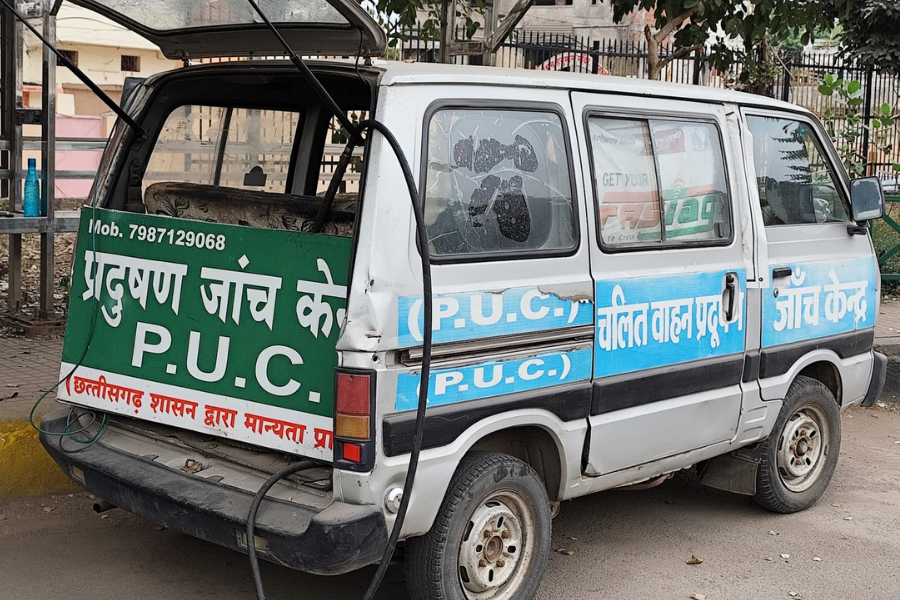
As we reported earlier, the Ministry of Road Transport and Highways (MoRTH) has revised the rules on the validity of the Pollution Under Control (PUC) certificate. Under the updated regulations, the PUC certificate validity for newer BS6 vehicles has been extended to 3 years, , rather than the current one-year validity. On the other hand, older vehicles will now have to undergo more frequent inspections.
Revised PUC Certificate Timelines
As per the revised Central Motor Vehicles Rules (CMVR), 1989, PUC certificate validity for BS6 vehicles will now depend on their age, calculated from the date of first registration. Vehicles have been divided into three age groups: up to 6 years, 6–10 years, and over 10 years.
Here’s a breakdown of the revised validity periods: –
| Vehicle’s Emission Compliance and Age | Private vehicles | Commercial vehicles |
| BS6 (up to 6 years old) | 3 years | 2 years |
| BS6 (6 to 10 years old) | 1 year | 1 year |
| BS6 (above 10 years) | 6 months | 6 months |
| BS4 | 6 months | 6 months |
| BS1, BS2, BS3 | 3 months | 3 months |
- Earlier, all BS6 vehicles, irrespective of age, followed the same annual PUC renewal cycle.
- Vehicles older than 10 years still need to undergo emission checks every 6 months.
- For BS4 vehicles, the PUC certificate validity has been reduced from 12 to 6 months.
- The BS1, BS2 and BS3 vehicles will now be required to undergo emission testing every 3 months instead of 6. This ensures that ageing vehicles, which are more likely to emit higher pollutants, remain under stricter monitoring.
- The ministry has also stated that these revised validity rules will not affect existing PUC certificates and will apply only when they are renewed.
For those unaware, regions like Delhi-NCR already followed these shorter validity periods, while the previous nationwide rules allowed PUC certificates to remain valid for twice as long.
Also Read: New Cafe 3 Norms Explained: EVs Get 3x Credit, Fuel Efficiency Rules Tighten