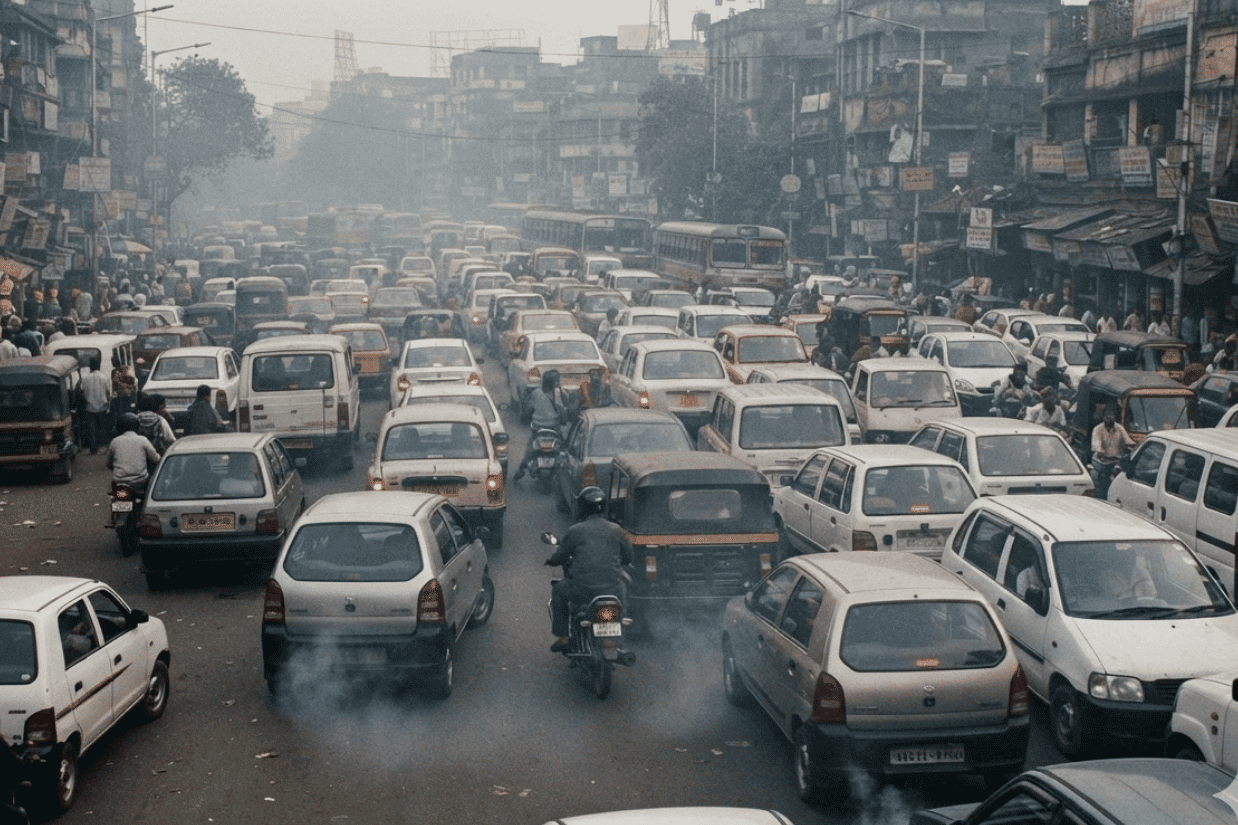
The central government has notified the Corporate Average Fuel Economy (CAFE) 3 norms, which are set to kick in from April 2027, bringing progressively stricter fuel efficiency and CO2 emission targets for carmakers, while offering higher compliance credit for electric and hybrid vehicles, which could encourage automakers to increase their EV share and improve the overall fuel efficiency of their fleets. But what exactly are the CAFE 3 norms, how do they work, and what could they mean for common car buyers? Let’s understand all in simple terms: –
What Are CAFE Norms In India?
As the name suggests, Corporate Average Fuel Efficiency (CAFE) norms are a set of regulations for carmakers, aimed at improving fuel efficiency by lowering carbon dioxide (CO2) emissions. It refers to the sales-to-volume weighted average, applicable to petrol, diesel, LPG, and CNG-fueled vehicles.
The average fuel consumption of all eligible cars sold by a manufacturer in a financial year is calculated by taking the average weight of its vehicles and comparing them against the overall fuel efficiency and CO2 emissions. This way, the CAFE standards push automobile manufacturers to produce & sell more lightweight, fuel-efficient, and cleaner models, including electric and hybrid vehicles, so that the overall CO2 emissions can be decreased.
CAFE 3 Norms Explained
The CAFE 3 norms are set to remain active between April 1, 2027, and March 31, 2032. This will apply to M1 category passenger vehicles manufactured/impoted for sale in the Indian market in the aforementioned period. The standards will continue to be calculated at the manufacturer level using the sales-weighted average fuel consumption of its vehicle portfolio.
Let’s take a look at the permitted fleetwide fuel economy average, which will progressively decrease each year: –
| Year | Permitted fleetwide fuel economy average* |
| FY28 | 3.996 litres/100km |
| FY29 | 3.860 litres/100km |
| FY30 | 3.7585 litres/100km |
| FY31 | 3.5313 litres/100km |
| FY32 | 3.3273 litres/100km |
*For a manufacturer with a reference fleet weight of 1,229kg
Manufacturers with fewer than 1,000 eligible vehicles sold annually will be exempted from meeting the specific CAFE target, but they will still need to report their average fuel-consumption performance.


CAFE 3 Norms Credit System: EVs and Hybrids Get Advantage
The CAFE norms have a credit system which helps manufacturers meet their targets by balancing the impact of higher-emission models. In simple terms, the overall fleet performance is what is taken into account under the CAFE norms, rather than every individual car meeting the target. So, if a company sells more EVs and strong-hybrid vehicles, which contribute to lower emissions, the fleet’s calculated average improves, and it offsets the impact of some higher-emission models from its petrol, diesel and CNG lineup.
| Vehicle Type | Super-Credit Multiplier |
| Battery Electric Vehicles (BEV) and Range-Extended Electric Vehicles (REEVs) | 3x |
| Plug-in Hybrid Electric Vehicle (PHEV) and Flex-fuel strong-hybrid | 2.5x |
| Strong Hybrid | 1.6x |
| Flex Fuel Ethanol Vehicles | 1.5x |
Pure electric vehicles and range-extended electric vehicles get the highest super-credit multiplier. That said, one pure EV can effectively be counted as three vehicles for this particular compliance calculation.
Credit Trade-off Mechanism
Under the CAFE 3 framework, a credit trade-off mechanism has been introduced, allowing manufacturers whose fleet performance is better than their prescribed targets to exchange/transfer/trade their surplus credits with other manufacturers through the buyout mechanism administered by the Bureau of Energy Efficiency (BEE). The price for these credits will increase from Rs 2,500 per g CO2/km in FY2028 to Rs 4,500 per g CO2/km in FY2032.
These provisions are intended to ease the compliance burden, provide flexibility during the transition and enable manufacturers to manage variations in their product portfolio and technology adoption pathways.
The 5-year CAFE 3 period will be divided into two compliance blocks: FY2028-FY2030 and FY2031-FY2032. Credits and debits can be carried forward within each block, but any unused credits will lapse at the end of the respective block.
Fuel-Efficient Technologies Also Get Rewards
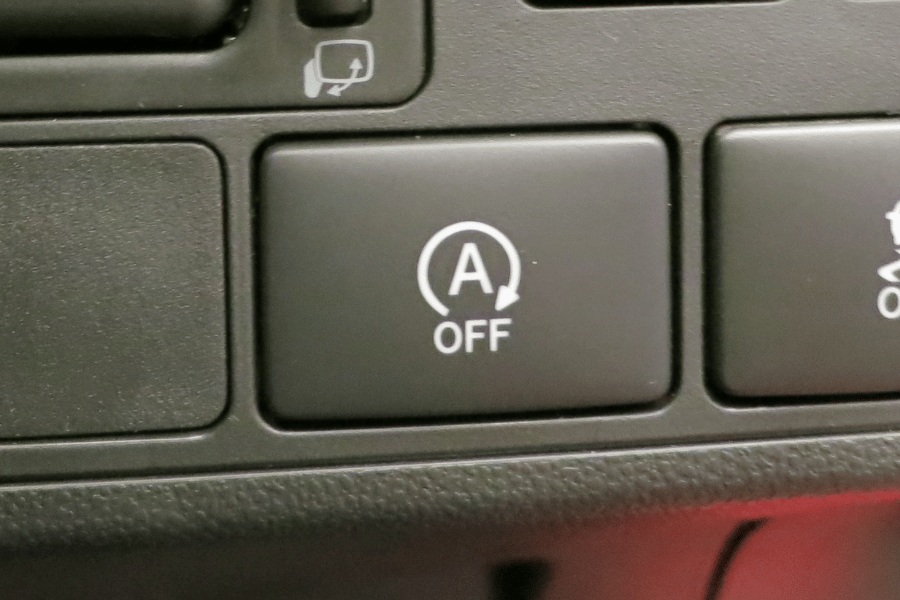
New CAFE norms allow manufacturers to claim a 1 g CO2/km reduction (max benefit capped at 9g CO2/km) for offering each eligible fuel-efficient technology and feature in their models. The list of eligible technologies is as follows: –
- Start-stop systems
- Tyre-pressure monitoring
- Regenerative braking
- 6-speed or higher transmissions
- Efficient 12V/48V alternators
- 12V/48V motor-generators
- LED exterior lighting
- Advanced glazing
- Electric water pumps
- High-efficiency air-conditioning systems
- Solar-reflective paint
- PWM-controlled radiator fans
WLTP-based Reporting To Be Introduced
As we reported earlier, CAFE 3 norms will begin a transition towards using the WLTP testing cycle for corporate efficiency calculations. However, reporting will be undertaken under both the Modified Indian Driving Cycle (MIDC) and the Worldwide Harmonised Light Vehicles Test Procedure (WLTP). This dual approach will facilitate India’s gradual transition towards globally harmonised vehicle testing practices.
The Ministry of Power, in consultation with the Bureau of Energy Efficiency (BEE), will separately notify the conversion factor for translating CAFE targets from the MIDC to the WLTP testing cycle.
Related: MIDC Part 1 & Part 2 Cycle: Understanding EV Range Testing

What Do CAFE 3 Norms Mean For Buyers?
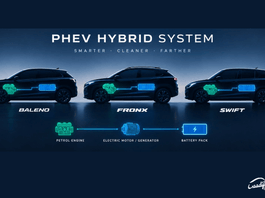
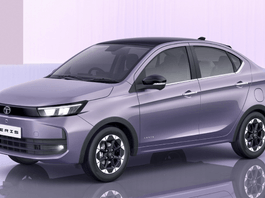
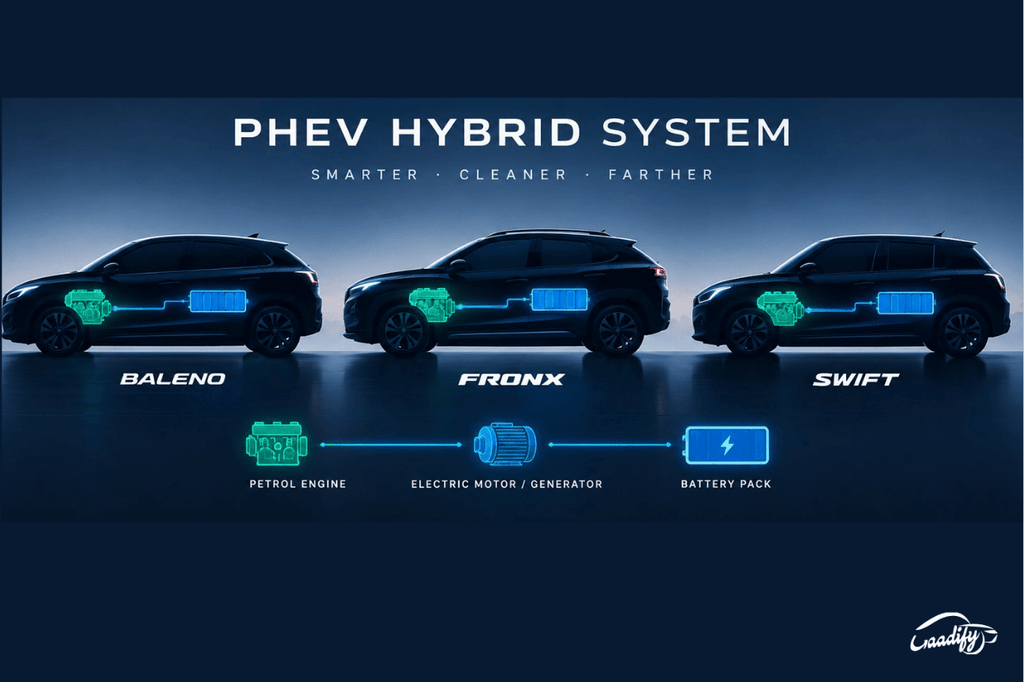
The CAFE 3 norms are for carmakers and unlikely to bring any immediate change in the way cars are purchased or driven. However, to meet stricter fleet-average fuel-efficiency and CO2 targets, carmakers are likely to introduce more EVs and an extensive line of hybrid vehicles, with strong-hybrid, mild-hybrid, plug-in-hybrid and range-extender technologies. In fact, Maruti Suzuki has already announced plans to introduce range-extender plug-in-hybrid technology in its compact cars from next year. Other carmakers, including Kia, Tata and Hyundai, are also planning to introduce new hybrid models to their lineup. In short, stricter compliance may result in improvements in the efficiency of existing petrol and diesel engines through engine optimisation and improved transmissions. At the same time, automakers may also introduce more fuel-efficient engines, flex-fuel, hybrids, and pure electric vehicles.