With skyrocketing fuel prices and tightening emission norms, electric vehicles are gaining popularity. However, when buying EVs, customers are often concerned about the true range of EVs, which often falls short of the certified range. In India, automakers currently follow the MIDC (Modified Indian Driving Cycle) to determine an EV’s range, which is further divided into Part 1 and Part 2. These cycles simulate different driving conditions to better reflect the driving behaviour and conditions commonly encountered in India, such as frequent stops, slow-moving traffic and urban driving.
Let’s break down what MIDC Part 1 and Part 2 mean and how they impact EV range testing.
Breaking Down MIDC Part 1 and Part 2
- As mentioned above, the MIDC testing cycle includes two parts.
- Part 1 denotes Urban/City driving and Part 2 represents Extra Urban/Highway driving.
- MIDC Part 1 simulates city driving conditions with frequent starts and stops. It consists of lower speeds and shorter acceleration bursts.
- MIDC Part 2 simulates highway driving with higher speeds and fewer stops. It is combined with Part 1 to measure the “Urban + Extra Urban” range.
- Earlier, EVs were being tested only for the City Driving conditions (Part 1). However, later the government mandated OEMs to test and declare range values with both parts of the cycles, ie. Urban + Extra Urban.
- Vehicles with multiple driving modes are tested in default mode (or worst-case mode if no default exists).
- The addition of the extra-urban (highway) component means certified ranges of EVs are expected to reduce as vehicles consume more energy at higher speeds.
- All OEMs are mandated to declare the range certified from these tests publicly.
- M1, M2 (up to 3500 kg GVW) and N-category of vehicles use MIDC Part 1 and Part 1 methods. On the other hand, the M2 (vehicles weighing above 3500kg) and M3 category vehicles follow the Delhi Driving Cycle.
- Compared to the ARAI range, the MIDC range is often seen as more realistic for everyday driving, as the ARAI test method uses an idealistic environment to test EVs, which can overestimate the range.
Also Check: Surprising Results: Study Challenges Notion of Electric Vehicles (EVs) Being Cleaner
C75 Method
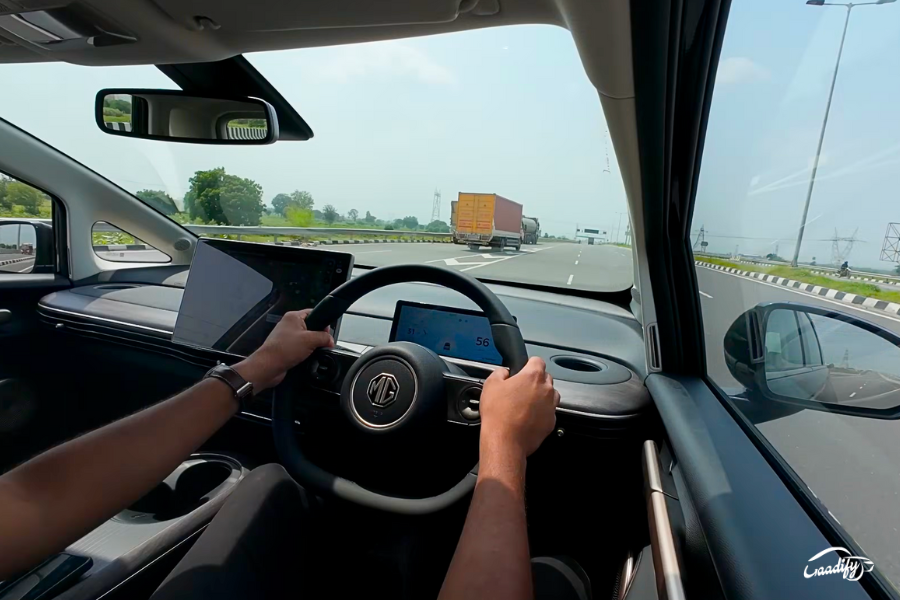
Apart from the MIDC test cycle, a C75 test cycle is also used to determine the EV range. It is a more rigorous testing method than the MIDC method and reflects better real-world driving conditions. The test cycle simulates different road conditions, including urban, suburban, and highway driving, and varying speeds, acceleration and deceleration, reflecting typical driving behaviour.
What other methods are used globally?
Globally, various methods are used to calculate the range of an EV. For example, Europe uses WLTP (Worldwide Harmonised Light Vehicles Test Procedure), whereas in the USA, the EPA (Environmental Protection Agency) cycle is used. On the other hand, CLTC (China Light-Duty Vehicles Test Cycle) is common in China.
Also Read: Electric Vehicles: How EV Battery Management System Works?

Conclusion
While MIDC Part 1 and Part 2 help in standardising EV range figures in India, they do not fully reflect real-world driving conditions. Understanding these cycles can help consumers set realistic expectations and make better purchasing decisions when choosing an EV. Customers should expect at least a 20-30% lower range than the claimed figures in actual usage.
Worth Watching: –