Similar to how ICE vehicles have two fuel sources: petrol and diesel, EVs have two methods of fueling up as well, either through AC or DC sources. How do these two power sources differ from each other? And is one better than the other? Let’s find out!
What is AC Charging?
AC charging is when you charge your vehicle using an AC (alternating current). AC is the kind of electricity that is sent from the power grid. It is called so as its flow of energy tends to change periodically i.e., alternates.
Also Read: Different Types Of Batteries Used In Electric Vehicles
AC current is of different voltage, frequency, and phase. It is primarily used to transfer current over large distances, as AC has the property to have its voltage increased or decreased with the help of special equipment known as a transformer. This allows us to change the AC voltage to very high levels to be able to transport it across large distances.
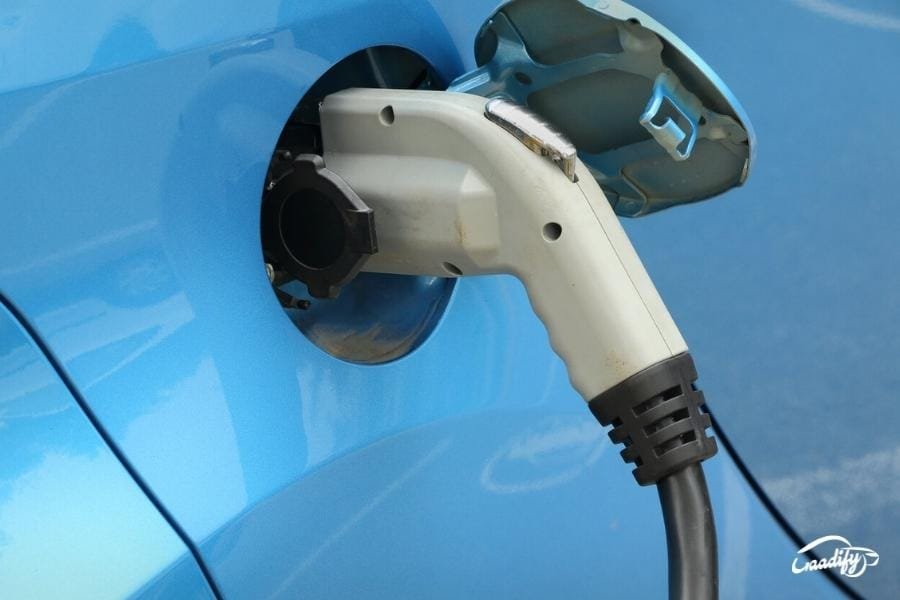
Now back to EVs, see even though the power grid sends AC voltage, what we use to store in our battery is DC voltage, so in any case, the AC voltage coming from the grid to the charger must first be converted to DC before being sent to charge the EV. So, if we use an AC fast charger, the conversion from AC to DC happens within the EV through an onboard charger, and it is then supplied to the battery.
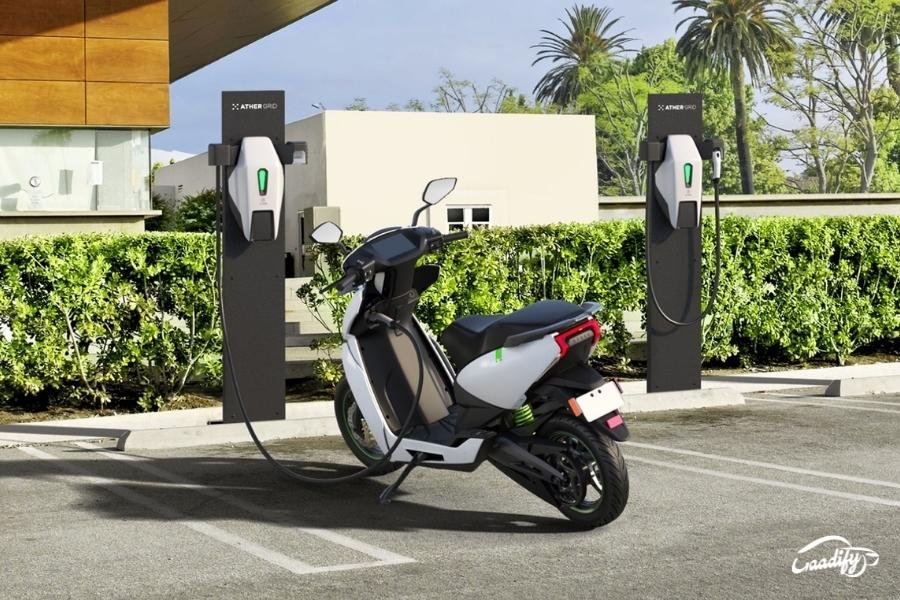
Pros of AC chargers/charging: –
- The size of AC chargers can be small.
- Can also be efficiently transported over long distances.
- Easy to manufacture and set up as no AC to DC converter is required.
- Can be connected directly to the grid.
Also Read: EV Battery Cycle Explained
Cons of AC chargers/charging: –
- Charging is slower over time due to much more losses during conversion from AC to DC.
- Cannot be as fast as a DC charger.
Also Read:
- NITI Aayog Releases Draft Battery Swapping Policy For Stakeholders
- Electric Vehicles: How EV Battery Management System Works?
What is DC Fast Charging?

DC is known as Direct Current and it’s basically what powers most of our devices. See, AC is only good for transportation over long distances due to its minimal loss and ability of voltage to be stepped up via transformers, but most of our electronics require consistent power so they are run using DC.
Direct Current (DC) moves in a straight line and has a consistent power output with a consistent frequency and no phase difference, and most renewable energy sources like solar energy and winder energy also produce DC only.
Since the battery stores DC voltage, it’s perfect to change them via a DC charger as there is no onboard conversion. That said, in DC fast-charging stations, the conversion from AC to DC happens outside of the EV i.e., within the charging stations using larger converters and so they are generally bulkier and have the capability to scale up their power output to nearly double or triple the AC chargers.
Also Read: Why Do Lithium-Ion Batteries Catch Fire? Ola and Pure EV Incident
Pros of DC chargers/charging: –
- Can provide super-fast charging.
- Are extremely scalable and can deliver higher amounts of power consistently during a charging period.
Cons of DC chargers/charging: –
- Due to onboard AC to DC converters, the DC fast chargers are bigger in size and more complex.
- Setting up and manufacturing DC chargers also takes more effort and resources. It also costs a lot more than AC chargers.
- DC charging creates a diminishing charging curve due to the EV’s battery initially accepting a quicker flow of power but gradually asking for less as it reaches full capacity.