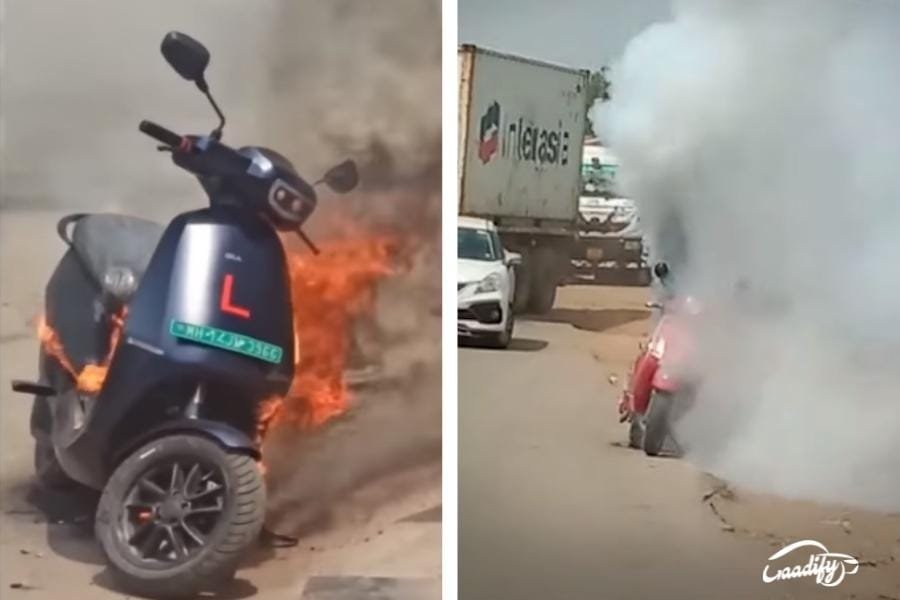
With the recent incidents of Ola S1 Pro, Okinawa, and Pure EV ePluto 7G scooters turning into fire balls, concerns regarding the safety of EV batteries have started to emerge. So without any ado, let’s discuss how our preferred choice battery (Lithium-Ion) actually works and most importantly, what makes it burst.
What is a battery and how does it work?
Before knowing why it explodes, let us first understand what is a battery: –
- A battery is essentially a device that converts chemical energy (contained within its active materials) into electric energy by means of chemical reactions.
- A battery pack in an electric vehicle (EV) is massive because it is made by combining multiple cells, which generate and store electric energy.
- Every battery contains electrodes (electric conductors that make contact with a nonmetallic part of a circuit), which consist of a positive terminal (anode) and a negative terminal (cathode) and the path between these two terminals is how energy/charge is transferred.
- When the charges flow from the anode to the cathode, it signifies that charges are flowing out of the battery, thereby indicating that the battery is getting discharged.
- When the charges flow from cathode to anode, it signifies that the charges are flowing into the battery, thereby indicating that the battery is getting charged.
- An electrolyte lies in between the anode and cathode. It is a membrane that ensures the transport of ions between anode and cathode.
Also Read: Different Types Of Batteries Used In Electric Vehicles
Why lithium-ion batteries are widely used in electric vehicles?
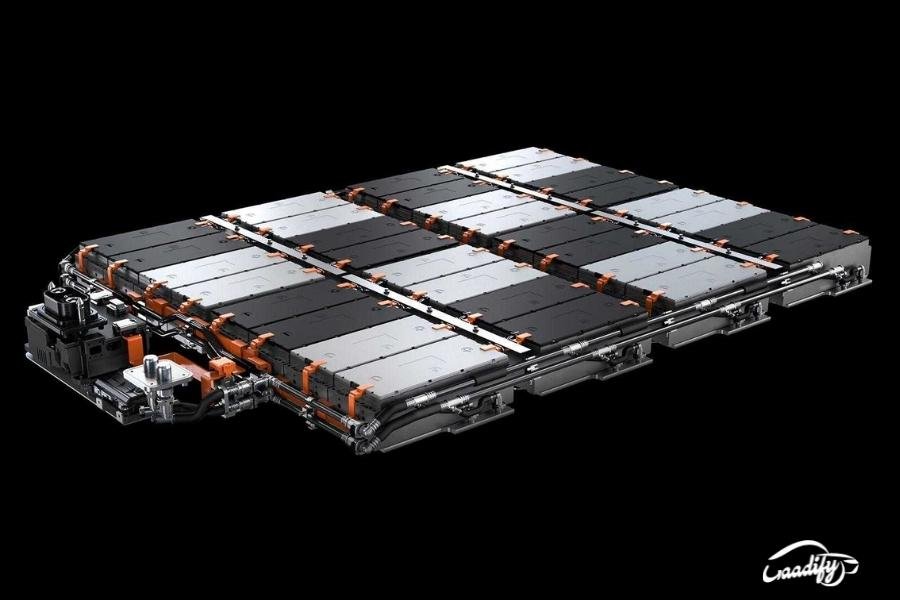
Great, now that we know how batteries work, it’s time to figure out why we use lithium-ion as our primary chemical for batteries. Well, there are several types of EV batteries in existence, but due to the high-power density of lithium-ion and its capability to retain its capacity even after multiple charges and discharge cycles, it has become a much more formidable choice over the existing options, making it viable in almost every scenario. Be it from small electric devices to phones or EVs, lithium-ion batteries show exceptional performance, making it the preferred pick (at least for now!)
Why do they explode though?
Although lithium-ion is extremely efficient and has tons of uses, it is prone to fire hazards because lithium is a flammable substance. Now even though there are multiple safety checks in play to ensure that a battery is properly sealed and insulated, and is always managed with a Battery Management System for additional safety, here are a few reasons why it tends to fail and combust: –
- Faulty Battery: Since an EV battery is comprised of multiple batteries in series to give that high current, it is possible for one of the batteries/cells to be faulty. Batteries also possess a property called “Thermal Runaway” where excess heat from one cell can be transferred onto another cell in close proximity, causing a chain reaction of malfunctions, and if the excess heat is not remedied, it ultimately leads to the breakdown.
- Liquid Electrolyte and High Ambient Temperature: In current lithium-ion batteries, the electrolyte that carries the charge, which under extreme heat can break down causing a reaction between the ions.
- Error with the BMS: The battery management system is responsible for maintaining temperature, current and voltage levels, keeping the battery from overcharging, discharging, and shortage. Sometimes a faulty BMS can neglect to check certain of these parameters causing the battery to further increase battery temperature.
- Accidental Damage: A damaged or punctured battery can burst the cell, which can lead to a fire.
- Short Circuit: A short circuit from faulty wires or other electrical parts can also damage the cells of the battery.
Also Read: Top 5 Pros and Cons Of Buying An EV
What now?
A fire in an EV battery, though extremely tragic, is part of the transition process. The more issues that come up, the better we are to deal with them in the future. And with solutions like solid electrolytes and different battery chemistries, we’re at the tip of the iceberg with EVs. As time goes on, technology will improve and the frequency of such issues will decrease.