Following several fire incidents arising from faulty batteries of electric vehicles (EV) in the past, a new set of battery safety norms has been proposed by the Ministry of Road Transport and Highways (MoRTH). The new battery safety norms will come into effect on October 1, 2022. Here are the details: –
- Amendments have been made to AIS 156 and AIS 038 Rev.2.
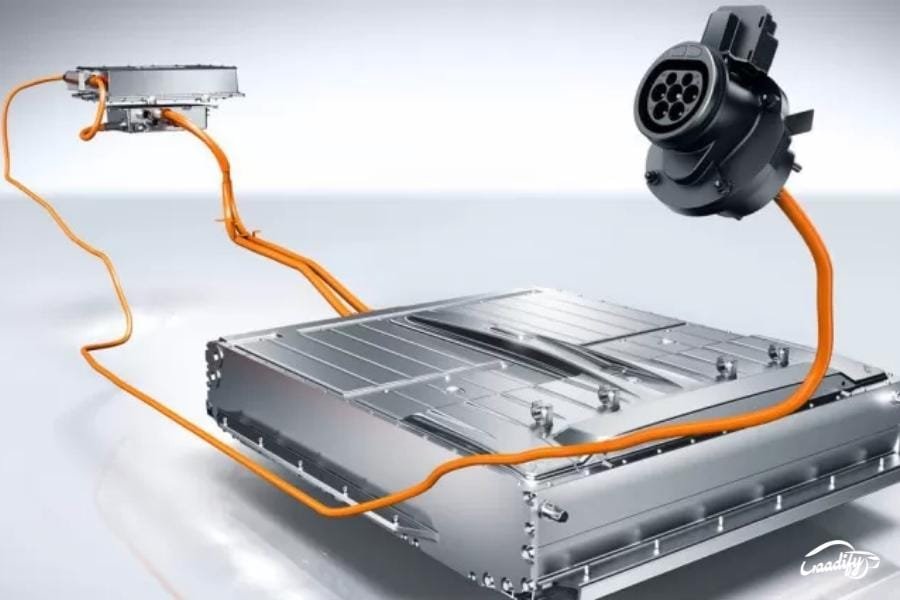
- These changes in the safety norms include safety requirements related to EV batteries/cells, Battery Management Systems (BMS), onboard chargers, the design of battery packs, and thermal propagation to avoid internal cell short circuits which could lead to fire.
- According to the new guidelines, the thermal battery packs (REESS) should have a pressure release vent to avoid building up of internal pressure and release of gases in case internal single cell short circuit. Furthermore, the battery pack must have at least four temperature sensors which are used by the battery management system (BMS) to measure the cell’s true temperature, and if the temp crosses the maximum permissible limit, an alarm should come as an alert. And if the vehicle is in use, the BMS should cut off the power supply.
- Active thermal management should also be ensured in the battery by the use of air cooling fins.
- The new rules also specify that there must be sufficient cell-to-cell spacing distance for effective heat transfer and cell isolation in case of thermal runaway in the Rechargeable Energy Storage System (RESS) be allowed.
- In addition to the features available in the Battery Management System (BMS), the new rules also mandate the use of an additional safety fuse or circuit breaker in the RESS.
- It is now also essential that each battery pack have an RFID tag, and that the BMS should have the ability to read and write RF signals. Also, important battery parameters such as its history, transactions, and state of health should be dynamically written onto the RFID tags, which can be useful during swapping and also for tracking and debugging in case of damage.
- There are several other important norms/regulations that EV manufacturers will be required to follow.
These new norms set by the Automotive Industry Standards (AIS) will be applicable to all electric two-wheelers, quadricycles, cars, and goods vehicles. If any company neglects these safety standards, a heavy penalty will be imposed and a recall of all defective vehicles will also be ordered.
Also Read:
- Different Types Of Batteries Used In Electric Vehicles
- EV Battery Cycle Explained
- Top 5 Pros and Cons Of Buying An EV
- Why Do Lithium-Ion Batteries Catch Fire? Ola and Pure EV Incident
These new safety norms for EV batteries are based on the recommendations of an expert committee, which was formed by MoRTH. The committee was chaired by the director of ARC, Hyderabad Shri Tata Narsingh Rao and Shri M.K. Jain (Scientist – G, CFEES, DRDO), Dr. Arti Bhatt (Scientist-F, Additional Director, CFEES, DRDO), Dr. Subba Reddy (Principal Research Scientist, IISc, Bengaluru), Prof. L Umanand (Chair, DESE, IISc, Bangaluru), Dr. M. Srinivas (Scientis-E, NSTL, Vishakhapatnam), Prof. Devendra Jalihal (Head, C-BEEV, 11T Madras, Chennai) were its members.
Currently, the draft is open for comments and suggestions, which can be sent through email to the Joint Secretary (MVL) at comments-morth@gov.in or by post to the Ministry of Road Transport and Highways, Transport Bhawan, Parliament Street, New Delhi-110001.