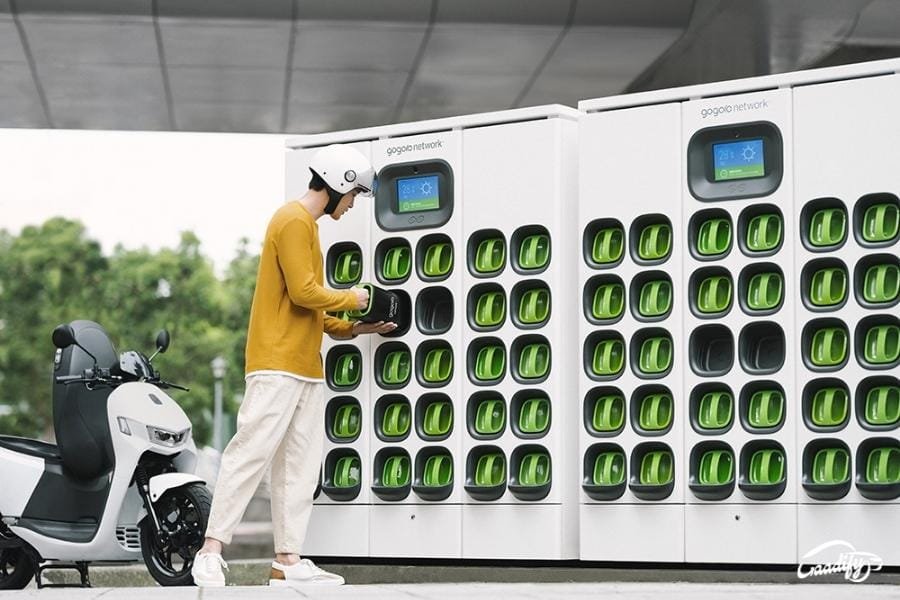
The Hon’ble Finance Minister announced the Battery Swapping Policy in her last budget speech considering the fact that setting up charging stations at mass level in urban areas may not be feasible for electric 2-& 3-wheelers. And now, the Indian government’s think tank, the Niti Aayog, has finally released the draft of the battery swapping policy under which the government will set up a battery swapping network across the nation.
Here are the critical attributes of the Battery Swapping Policy that you should know: –
- Battery swapping falls under the ”Battery as a Service (BaaS)” business model, which involves users buying electric vehicles without the battery pack, significantly lowering upfront costs, and paying a recurring subscription fee to service providers for battery services throughout the vehicle’s life span.
- As per the draft, the govt will establish the battery swapping network across India in phases.
- In the first phase, metropolitan cities with a population of over 40 lakh will be prioritized.
- All major cities, including UT headquarters, state capitals, and towns with a population of over 5 lakh, will be covered in 2nd phase.
- The Central Nodal Agency responsible for the rollout of EV public charging infrastructure will be responsible for the implementation of battery swapping networks across the country.
- The policy also asks the EV makers to sell vehicles with swappable batteries without a battery pack so that the purchase cost could be minimized.
- Standards will be adopted or approved by the appropriate agencies to enable the safe operation of certified battery packs.
- To implement unique traceability across the battery lifecycle, a Unique Identification Number (UIN) shall be assigned at the manufacturing stage for tracking and monitoring EV batteries.
- Any individual or entity can set up a battery-swapping station (BSS). However, they have to maintain the technical, safety, and performance standards.
- Municipal corporations will be responsible for planning, zoning permissions, and land allocation for battery swapping stations.
- Energy Departments and electricity distribution companies (DISCOMs) will be accountable for the supply of power to battery swapping stations, whereas the State Electricity Regulatory Commissions will be liable for concessional power tariffs, open access, and other regulatory incentives or support for battery swapping services.
- All battery swapping stations (BSS) should serve at least one vehicle segment (e-2W, e-3W, LCV, etc.), and each BSS should serve at least two EV OEMs.
This Battery Swapping Policy will prompt users to adopt EVs and enable better lifecycle management of batteries, including maximizing their usage during their usable lifetime and end-of-life battery recycling.
Also Read: Vehicle Scrappage Policy – All You Need To Know About
This Policy will be valid from the date of its public notification till 31st March 2025, and will be reviewed and extended thereafter, as may be decided by the Ministry of Power. As of now, it is available for stakeholders comments till 5th June 2022.