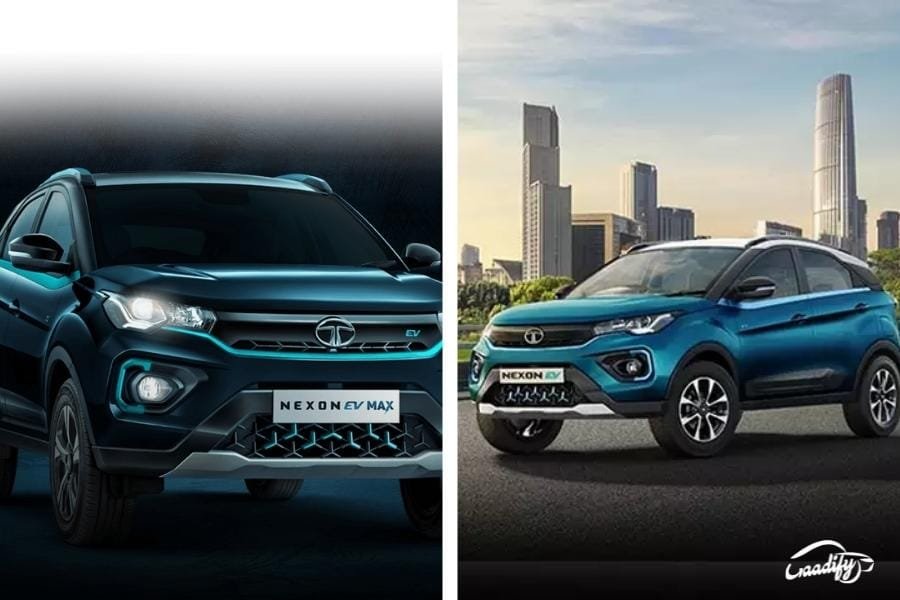
The latest update to India’s best-selling EV comes in the form of the Tata Nexon EV Max, which addresses a lot of the issues pertaining the Nexon EV and also adds a host of premium features to make that EV increment a bit more justifiable. Just what is different in this new top-of-the-line Nexon EV offering? Let’s find out!
Bigger Battery, Better Range
Probably the biggest concern with the Tata Nexon EV was its range, although being claimed at 312 km+ by the carmaker, it would only be able to deliver 190 km – 210 km at best in real-life conditions. Tata solved this by offering a larger 40.5 kWh battery pack with the Nexon EV Max, almost 10 kWh bigger that the regular Nexon EV, which had a 30.2 kWh battery pack.
Due to this 30% increase in battery capacity, the Nexon EV Max now boasts a claimed range of 437 km, and although you might not actually get that number, it will now at least guarantee a 300 km+ real-life range which is plenty good over the regular Nexon EV.
Bigger Motor, Better Performance
Tata has also made upgrades to the motor, so all that added weight from the extra battery doesn’t hinder your performance. The Tata Nexon EV Max comes equipped with a slightly bigger 100 kW motor, which outputs 143PS of max power and 250Nm of peak torque, making the upgraded EV 16PS more powerful and 5Nm more torquier than the previous model. Besides, the Tata Nexon EV Max is also said to beat out the older Nexon EV in a 0-100 kmph by 0.9s, with the Nexon EV achieving the mark in just 9s.
Cosmetic Updates
On the outside, the design theme is pretty much the same between both models with just subtle visual changes. That said, the Nexon EV Max gets newly designed 16-inch diamond-cut alloy wheels, a new Intensi-Teal color shade as exterior changes, and a new Makrana Beige theme with leatherette seats inside the cabin.
Better Tech and Features

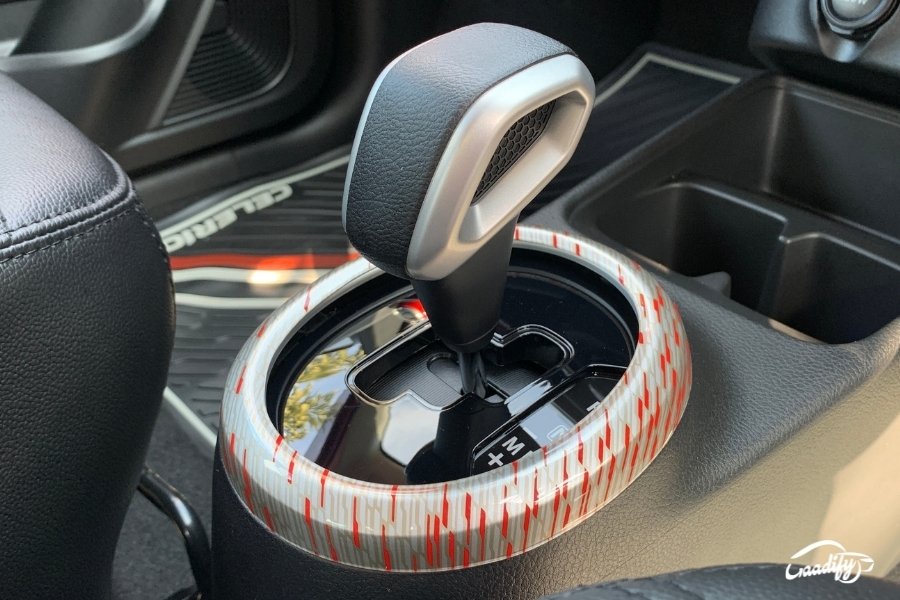
The Nexon EV Max witnesses loads of new additions in terms of features. These include a new jeweled illuminated drive selector with a dedicated ‘PARK’ mode, wireless charger, auto-dimming IRVM, ventilated front seats, multiple drive modes (Eco and Sport), air purifier, multiple regenerative braking modes, and all new ZConnect 2.0 Connected Car technology with now Smart Watch integration.
In terms of safety, the Max comes with standard features such as an electronic parking brake with auto-hold function, electronic stability programme, hill-hold assist, all four disc brakes, a tyre pressure monitoring system, and hill descent control.
All these new additions over the standard Nexon EV will really up your overall cabin and ownership experience and justify that added incremental cost.
Adjustable Regenerative Braking
The standard Tata Nexon EV has a single pre-set regenerative braking level (non-adjustable), whereas the Nexon EV Max comes with adjustable regen with three levels of braking, allowing you to either completely turn regenerative braking off or have it so strong that it becomes single pedal driving.
Fast Charging Option

While both the Nexon EVs get a standard 3.3 kW home charger, the Nexon EV Max can also be had with an 7.2kW AC fast charger at some additional cost that can juice it up from 0 to 80 percent in around 6.5 hours.
Variant Options
Tata offers the standard Nexon EV in three variants: XM, XZ+, and XZ+ Lux, whereas the new electrified Nexon comes in two trims: XZ+ and XZ+ Lux. Click here for variant-wise features details.
Much Pricier
With all the added tech, features, bigger motor, and battery pack, the Nexon EV Max commands a premium of up to Rs 2.04 lakh over the regular model.