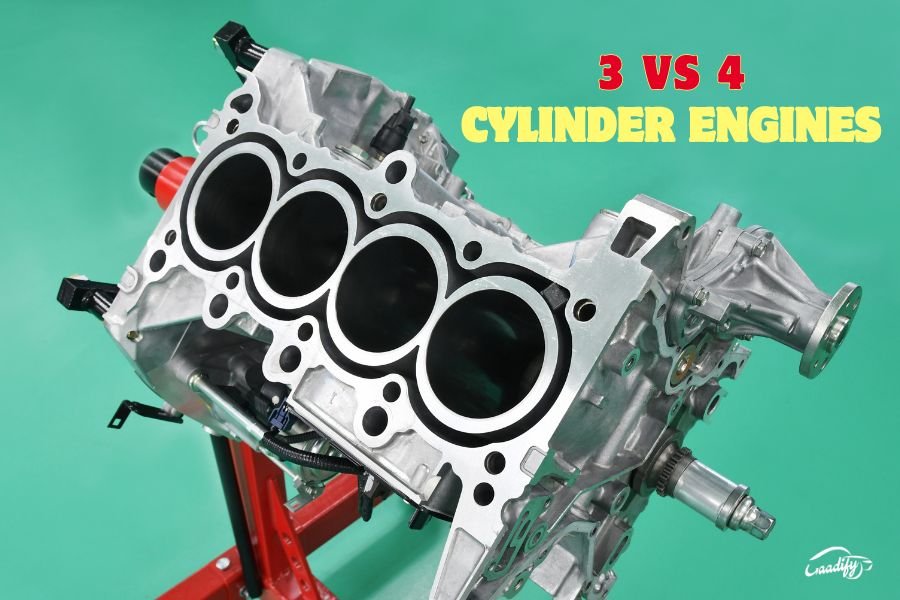
With the launch of the new-gen Maruti Suzuki Swift, which ditches the 4-cylinder K-Series engine for the new Z-series 3-cylinder unit, the old debate of 3 vs 4 cylinders has again been raised. The number of cylinders is an essential aspect that impacts the performance, fuel efficiency, and overall price of a vehicle. In recent years, three-cylinder engines have gained popularity, especially in smaller cars and SUVs, due to technological advancements and strict emission norms. Meanwhile, the traditional four-cylinder engine remains a staple in the automotive industry. This article provides an economic breakdown of 3-cylinder vs 4-cylinder engines, exploring their differences, advantages, and potential trade-offs.
What is a cylinder in an engine?
Cylinders are the powerhouse of an engine, where fuel combustion process occurs to generate power. The number of cylinders in an engine affects its smoothness, overall output, and efficiency.

3-Cylinder Engine vs. 4-Cylinder Engine – Understanding the Difference
| Parameters | 3-Cylinder Engine | 4-Cylinder Engine |
| Size and Weight | Generally, three-cylinder engines generate less power compared to their four-cylinder counterparts. | Higher number of cylinders and moving parts make it bigger in size and comparatively heavier than a 3-cylinder mill |
| Power Output | Ideal for smaller/lightweight vehicles with where fuel efficiency and cost savings are prioritized over high power output. However, these days, turbocharges and direct injection technologies are being used with 3-cyl engines, especially in compact SUVs to significantly boost their performance | Typically provide more power and torque output, making them suitable for a wider range of vehicles |
| Smoothness | Tend to have more noticeable vibrations due to their odd number of cylinders and firing intervals (Companies use balancing shafts and advanced engine mounts to mitigate these issues) | Thanks to a more balanced firing order, 4-cylinder engines typically offer smoother operations and less vibration |
| Efficiency | With lower weight and less internal friction due to less number of cylinders, they offer better fuel economy over their 4-cyl counterparts | Generally consume more fuel than 3-cylinder engines due to the additional cylinder |
| Emissions | With higher fuel efficiency, three-cylinder engines typically create fewer emissions compared to larger engines | Due to higher fuel consumption, four-cylinder engines generally emit more CO2 than three-cylinder engines |
| Production Cost | Due to lesser materials and parts, three-cylinder engines are cheaper to produce | Have higher production cost due to an additional cylinder and more moving parts |
| Maintenance | Maintenance costs can be lower due to fewer components | Maintenance costs can be slightly higher due to more number of components |
| Practical Application | Ideal for smaller/lightweight vehicles with where fuel efficiency and cost savings are prioritized over high power output. However, these days, turbocharges and direct injection technologies are being used with 3-cyl engines, especially in compact SUVs, to significantly boost their performance | Perfect for usage where a good balance of power and efficiency is required |
Conclusion
Choosing between a 3-cylinder and a 4-cylinder engine typically depends on your requirements and driving needs. We recommend you to chose a 3-cylinder vehicle if you prioritise mileage and lower maintenance, especially buying a smaller car for city driving. On the other hand, opting a 4-cylinder engine will be a better choice if you need more power, smoother performance and versatility. However, always check the technological advancements made by companies on their engines. Additionally, always test drive the vehicle before making your final choice.
Related – Types Of Automatic Transmission Explained
: