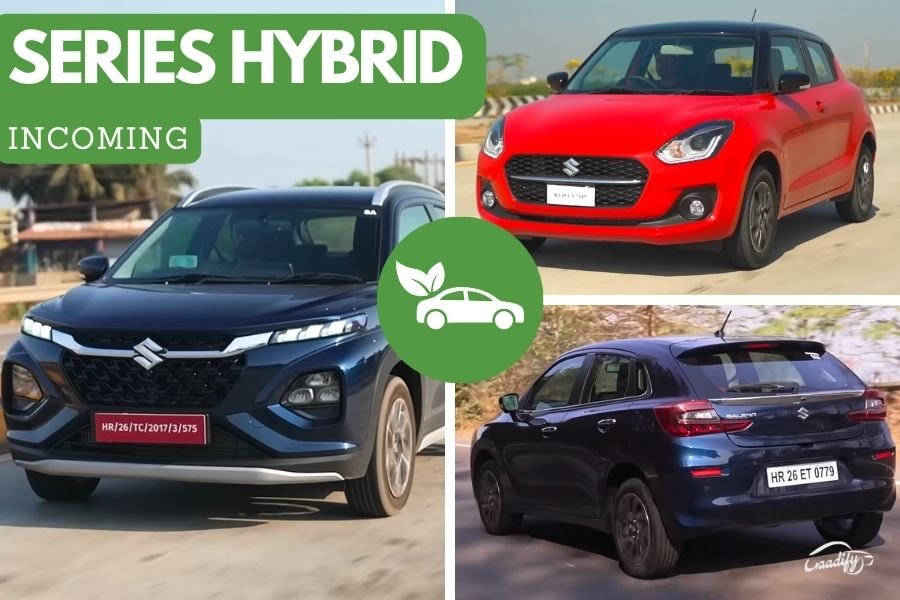
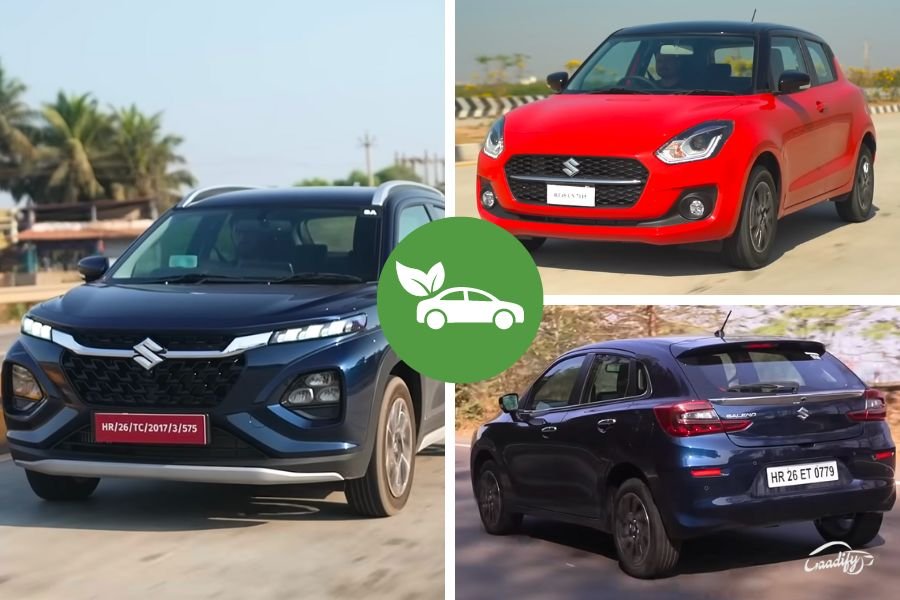
While most automobile brands are charging into the realm of electric vehicles (EVs), Maruti Suzuki and Toyota are placing a greater emphasis on hybrid vehicles. Encouraged by the enthusiastic response to the Grand Vitara Hybrid and Invicto Hybrid, Maruti Suzuki is now doubling down on hybrids with the introduction of a three-row version of the Grand Vitara (codenamed Y17) and hybrid variants of the Fronx, both set to debut in 2025. The carmaker is also developing hybrid variants of Baleno (codenamed YTA), a Spacia-based MPV (codenamed YDB), and Swift, set to be launched by 2027.
- As per the reports, all these upcoming Maruti Suzuki offerings will be powered by a new in-house developed Series Hybrid Powertrain (codenamed HEV), except for the Y17 SUV, which will continue to get Toyota’s series-parallel hybrid system.
- The new series hybrid powertrain from Maruti Suzuki is claimed to be much cheaper to manufacture than the series-parallel hybrid system.
- The hybrid versions (HEV) of Maruti Suzuki Fronx, Swift, next-gen Baleno, and YDB MPV will utilise the brand’s all-new 1.2-litre, 3-cylinder Z12E engine, which recently made debut on the 4th-gen Swift in Japan. Expect them to return a fuel efficiency between 35-40 km/l.
Also Read: Maruti Fronx Turbo Velocity Edition Launched
What Is A Series Hybrid System?
Just like EVs, the wheels are solely powered by electric motors in a series hybrid powertrain, while the internal combustion engine (ICE) is used only to generate electricity, which is then utilised to charge the battery or directly power the electric motors. This setup is also called “Range Extender Hybrid”, which can potentially improve fuel efficiency, especially in city usage, and reduce emissions compared to traditional ICE vehicles.
Let’s take a look at the advantages and disadvantages of a Series Hybrid System compared to a Parallel Hybrid System: –
| Advantages | Disadvantages |
| Can be designed to run on various fuel sources like gasoline, diesel, natural gas, or biofuels. | Limited electric-only range due to reliance on the internal combustion engine for electricity generation. |
| Can offer high fuel efficiency in city conditions as the engine only operates at its optimal RMP to generate electricity. | Series hybrids may not be highly efficient on highways because the electric motor primarily propels the vehicle, leading the internal combustion engine (ICE) to potentially work harder to generate electricity. |
| Unlike parallel hybrids, where the engine directly propels the wheels, the series hybrid can significantly reduce emissions | Efficiency losses associated with energy conversion processes involved in generating and utilizing electricity. |
| Series hybrids feature simpler powertrain designs compared to parallel hybrids, as they lack a direct mechanical link between the internal combustion engine and the wheels, potentially reducing complexity and maintenance needs. |