A few days back, Ola Electric launched the second-generation (Gen 2) version of the S1 Pro electric scooter. Save for some minor visual distinctions, the Ola S1 Pro Gen 2 looks similar to the Gen 1 model. However, things are more crucial than what meets the eye. So, here’s a detailed comparison of the Gen 1 and Gen 2 versions of the Ola S1 Pro to highlight the evolving differences.
Design and Platform Changes
- First thing first, the new S1 Pro is based on Ola’s Gen-2 platform, which also underpins the S1 Air and S1 X. This new platform is claimed to be built with fewer parts than the Gen 1 platform and is also lighter in weight. Despite this, Ola asserts that it is stronger than before.

- When it comes to design, the overall shape of the upgraded scooter remains identical to the Gen 1 model. However, unlike the Gen 1 model, which has a spine running through the floorboard, the Gen 2 model boasts a flat floorboard.

- Towards the rear, the split aluminium pillion grab handles have been replaced with a more conventional yet sturdier single steel tube grab rail, which is easier to hold.
- Ola has also replaced the full plastic cover around the belt drive with a very minimal cover.
Underpinnings

- Ola has made some significant changes to the underpinnings. Starting with the front, Ola’s signature single-arm front suspension has been replaced with a traditional telescopic fork on the Gen 2 model. Interestingly, despite reports of front suspension breakage and calls for an upgrade, Ola has consistently proclaimed that their single-arm suspension is 200 per cent superior to a conventional telescopic fork. Now, the decision to change this raises questions about Ola’s previous claims.
- The horizontally mounted rear monoshock from the Gen 1 is now vertically oriented. Not only this, the EV maker has also replaced the single-sided cast aluminium swingarm of the Gen 1 with a traditional steel box section swingarm.
Powertrain and Other Electronics
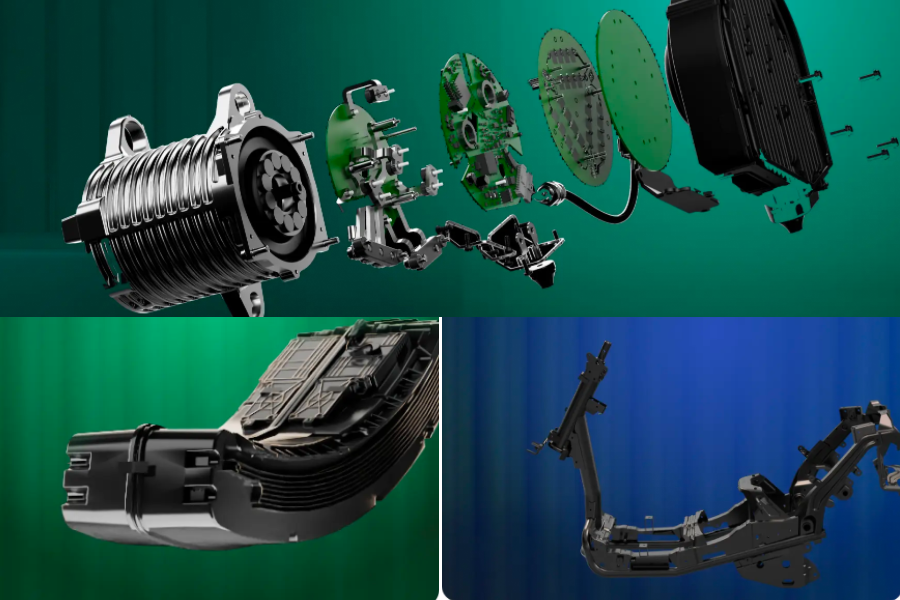
- The Gen 2 version continues to get a 4.0kWh battery pack. However, the packing of the battery pack has been improved to make it lighter.
- Ola has also redesigned the motor to make it more compact and lighter. With this, the nominal power output has been reduced to 5kW from the earlier output of 5.5kW. However, the peak power output has been increased by 30% – from the earlier 8.5kW to now 11kW. As a result, As a result, this electric scooter now claims a top speed of 120 kmph from the earlier 116 kmph. The 0-40 kmph acceleration time has also decreased from 2.9 seconds to 2.6 seconds.
- When it comes to riding range, the overall claimed ARAI figure has been increased from 181km to 195km.
- The other electrical system has also been optimised for faster processing.
Dimensions
With all the above-mentioned changes: –
- The 2023 Ola S1 Pro (116kg) is now 5kg lighter than the Gen 1 model (121kg).
- Ground clearance has been reduced by 5 mm (now standing at 160mm).
- Seat height has been elevated by 5mm (now standing at 805mm).
- Underseat storage has recued from 36 litres to 34 litres.