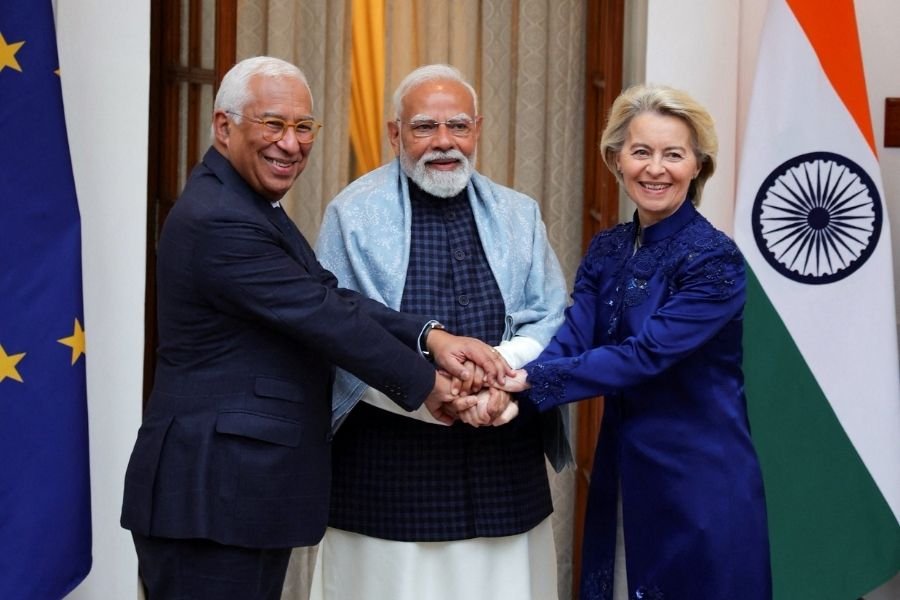
- India and the EU have signed the FTA.
- Reduction in import duties will be implemented in a phased manner, starting at 40% and later dropping to 10%.
- The implementation timeline is yet to be revealed.
India and the European Union have signed a free trade agreement (FTA), under which tariffs on imported European cars will gradually reduce from the existing 70% to 110% range to 10%, applicable to 2.50 lakh vehicles a year. However, whether a price bracket will also be applied is yet to be confirmed. Tariffs on car parts will also be decreased after a period of five to ten years, causing locally assembled cars to be more affordable over time.
For those unaware, the talks and negotiations on the India-EU trade deal have been going on for nearly 18-20 years, having first begun in 2007. However, the discussions were put on hold due to major disagreements, mainly over import duties on cars and wines, IPR (Intellectual Property Rights), and market access demands. The talks were later restarted in 2021 and have now finally taken their final shape.
The agreement is being hailed as the “mother of all deals” by leaders of both sides due to its scale and economic impact.

Experts suggest that the India-EU FTA could expand India’s luxury car market, which currently accounts for just 1% of the overall passenger vehicle (PV) segment. The high-end luxury and performance cars, such as the Audi RS range, BMW M models, Porsche, and Mercedes-Benz AMG series, will get a massive price cut. And since the luxury car segment is relatively small, it is unlikely to disrupt the mass-market PV industry.
India’s passenger vehicle segment is largely dominated by local manufacturers and Asian brands like Maruti Suzuki, Tata, Mahindra, Toyota, Hyundai and Kia. European car brands, including mass-market manufacturers like Renault, VW and Skoda, only account 3% of the total sales. However, it is worth noting that the Indian automobile market is price-sensitive and still in the early stages of maturity. Hence, the impact may not be significant enough in the early years, but could benefit European automakers in the long term.