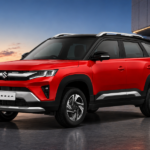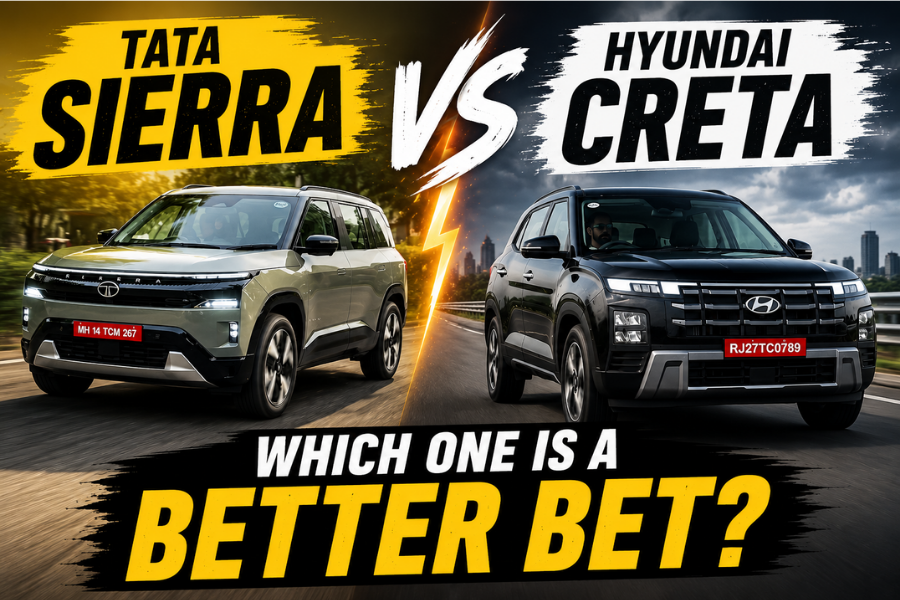
There’s an intense competition in the highly congested 5-seater mid-size SUV segment. While the Hyundai Creta is the undisputed segment-leader, the recently launched Tata Sierra is gaining traction among buyers with its premium design, multiple powertrain options and feature-loaded cabin. In fact, Tata has left no stone unturned in taking on the segment leader. While the Korean SUV has been on sale since 2015 and is known for its well-balanced package and reliability, the Tata Sierra 2026 is actually an all-new product which uses a legacy nameplate to attract buyers. So, if you’re in the market for a new SUV and are confused between these two offerings? Fret not, we are here to help you make an informed decision.
2025 Tata Sierra vs Hyundai Creta: Dimensions
| Parameters | Tata Sierra | Hyundai Creta |
| Length | 4340mm | 4330mm |
| Width | 1841mm | 1790mm |
| Height | 1715mm | 1635mm |
| Wheelbase | 2730mm | 2610mm |
| Seating Configuration | 5 seater | 5 seater |
| Boot Space | ≈ 440 litres (622 litres from top to bottom) | ≈ 433 litres |
The new Tata Sierra surpasses the Hyundai Creta in every dimensional parameter. In fact, it has the segment’s longest wheelbase. All of this reflects in a better space inside the cabin.
2025 Tata Sierra vs Hyundai Creta: Engine Specifications
| Model | Tata Sierra | Hyundai Creta | ||||
| Engine | 1.5-litre NA Petrol | 1.5-litre Turbocharged Petrol | 1.5-litre diesel | 1.5-litre NA Petrol | 1.5-litre Turbocharged Petrol | 1.5-litre diesel |
| No of Cylinders | 4 | 4 | 4 | 4 | 4 | 4 |
| Max Power | 106PS | 160PS | 118PS | 115PS | 160PS | 116PS |
| Peak Torque | 145Nm | 255Nm | 260Nm (MT), 280Nm (AT) | 144Nm | 253Nm | 250Nm |
| Transmission | 6-speed manual and 7-speed Dual-Clutch Automatic | 6-speed torque converter automatic | 6-speed manual and 6-speed torque converter automatic | 6-speed manual and CVT | 7-speed Dual-Clutch Automatic | 6-speed manual and 6-speed torque converter automatic |
| Drivetrain | Front-wheel-drive (FWD) | Front-wheel-drive (FWD) | ||||
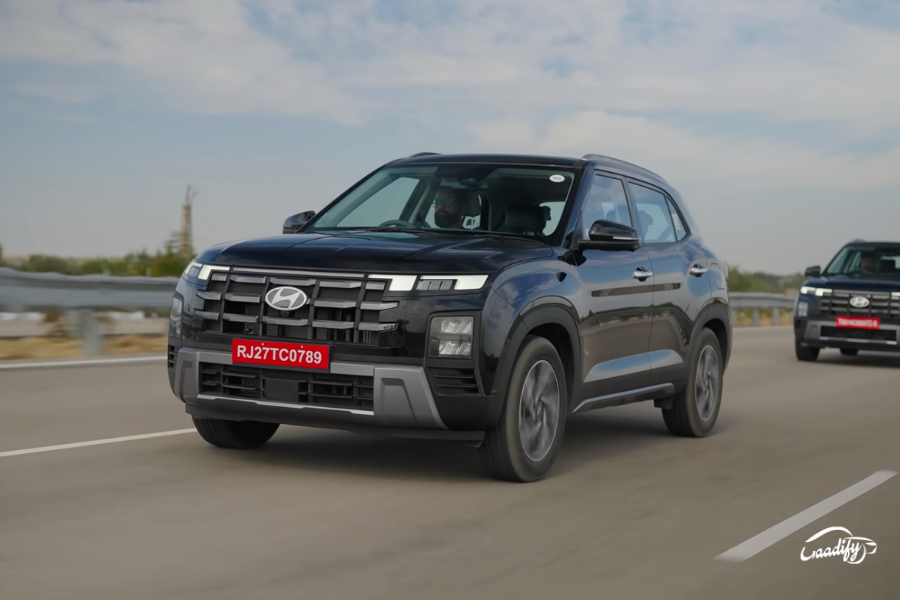
Both the Sierra and Creta get three engine options, comprising two petrol and one diesel mill, with the performance figures on par with each other. Hence, the clever choice between the two SUVs will depend on the overall driving experience rather than on numerical data. However, it is worth noting that the Creta’s turbocharged mill comes with a 7-speed dual-clutch automatic transmission (DCT), which should be more engaging with quick shifts and sporty feel than the Sierra’s 6-speed torque converter automatic unit.
On the contrary, Tata has offered the DCT with the SUV’s naturally aspirated petrol mill, which produces less torque. However, thanks to the Atkinson cycle, its peak output comes at just 2,100 rpm compared to Creta’s 4,500 rpm. But being way heavier than the Creta, the Sierra has a lower power-to-weight ratio, which makes it struggle, especially in full load conditions and during overtaking. Tap here to see our first drive impressions about the Sierra’s 1.5 N.A. variant.
2025 Tata Sierra vs Hyundai Creta: Features
| Common Features | Features Exclusive To Tata Sierra | Features Exclusive To Hyundai Creta | |
| Exterior | – Automatic LED headlamps – Alloy wheels – Puddle lamps | – Bigger alloys (19-inch in the top variant) – Welcome & goodbye lighting animation – Flush-fitting door handles – Hidden rear wiper – LED front fog lamps | – Black alloys with red callipers (exclusive to Knight variant) |
| Interior | – Panoramic sunroof – Leatherette seats – Leatherette wrapping on the steering wheel – Parcel tray – Ambient lighting – LED cabin lamps | – Illuminated brand logo on the steering wheel | – Sporty metal pedals (exclusive to Knight variant) |
| Comfort & Convenience | – Rain-sensing wipers – Front wireless smartphone charger – Dual-zone climate control – Rear AC vents – Ventilated front seats – Powered driver’s seat with memory function – Air purifier – Rear window sun shades – Recline function for 60:40-split rear seats – Front & rear centre armrests – Adjustable headrests – Drive modes – Terrain modes – Paddle shifters – 360-degree camera – Rear defogger | – Heads-up display (HUD) – Powered tailgate with gesture control – Extendable thigh support for front seats – Extendable sunvisor – Adjustable headrest for rear centre passenger seat | – 8-way powered co-driver seat Electric BOSS mode (Sierra has a manually adjustable BOSS mode) – Retractable rear tray – Rear wireless charger |
| Infotainment | – Twin connected displays for infotainment and digital instrument cluster – Wireless Apple CarPlay and – Android Auto – Connected car tech | – 12-speaker JBL sound system with a soundbar and Dolby Atmos support – 12.3-inch co-passenger entertainment screen – Bigger infotainment display (12.3-inch against Creta’s 10.25-inch unit) | – 8-speaker BOSE sound system |
| Safety | – Front, side and curtain airbags – ABS with EBD – Electronic stability control – All-wheel disc brakes – Traction control – Vehicle stability management – Hill start & descent assist – Tyre pressure monitoring system – ISOFIX child seat anchors – Electronic parking brakes with auto-hold – Front & rear parking sensors – Blind-spot monitoring – Level-2 ADAS suite | – Electronic parking brakes with auto-hold are standard in all variants | – Front & rear dashcam |
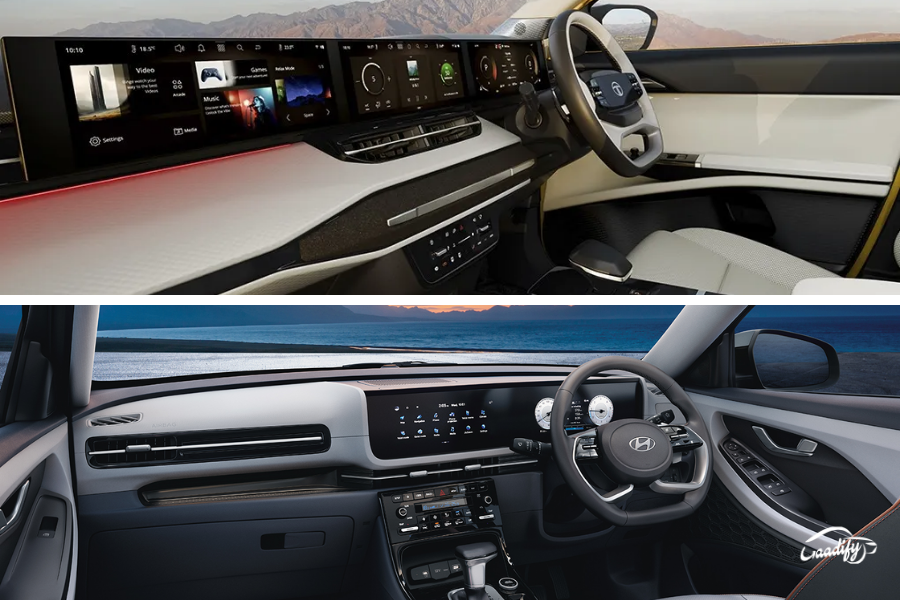
Both the new Tata Sierra and Creta are well-equipped with modern-day tech and comfort amenities. However, the Sierra stands out with features like the segment’s largest 19-inch alloy wheels, flush door handles, extendable under-thigh support for front seats, triple-screen setup with co-passenger entertainment display, powered tailgate with gesture control, as well as a heads-up display (HUD). Additionally, it also gets Dolby Atmos support for a more immersive sound experience.
On the other hand, the Creta features an 8-way powered co-passenger seat, rear retractable tray and powered BOSS mode, all to enhance the overall ownership experience in everyday usage.
Related: 2025 Tata Sierra Variant-wise Features and Engine Options Detailed
2025 Tata Sierra vs Hyundai Creta: Price Range
| Powertrain | Tata Sierra | Hyundai Creta |
| 1.5-litre NA Petrol | Rs 11.49 – 17.99 lakh | Rs 10.90 – 18.84 lakh |
| 1.5-litre Turbo Petrol | Rs 17.99 – 20.99 lakh | Rs 19.91 – 20.06 lakh |
| 1.5-litre Diesel | Rs 12.99 – 21.29 lakh | Rs 12.53 – 20.11 lakh |
*All prices ex-showroom Delhi
2026 Tata Sierra vs Hyundai Creta: Which Is A Better Bet?
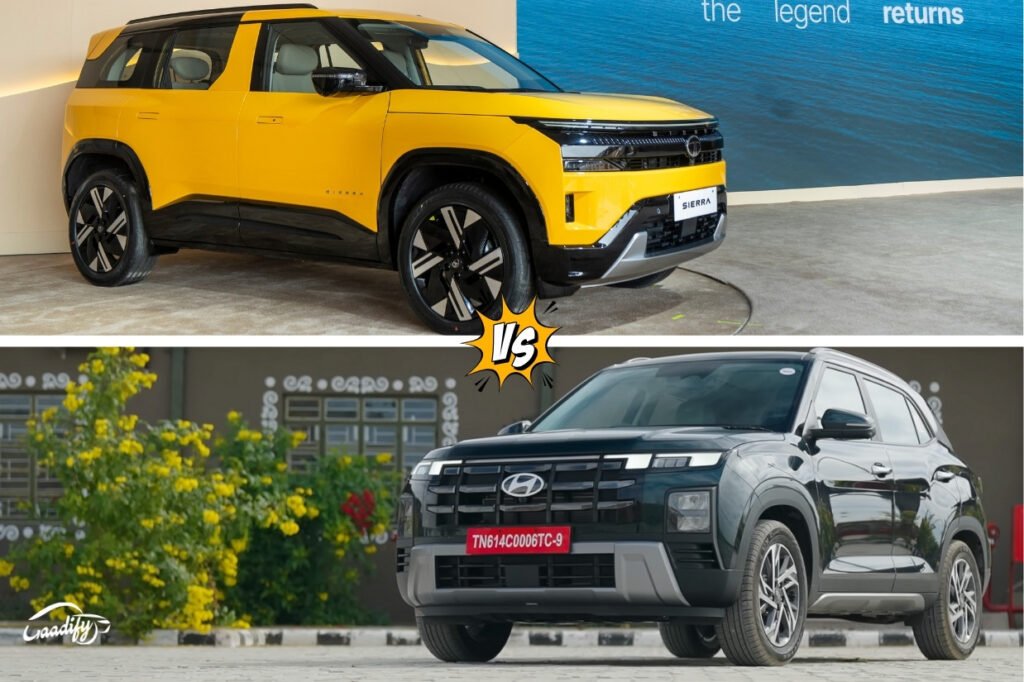
The Hyundai Creta has a strong foothold in the Indian market, while the Sierra is a relatively new entrant in the segment, which has no common linkage with the ‘90s OG Sierra, except for some minor design inspiration on the side profile. In fact, it is a more modern and tech-loaded SUV that truly impresses on paper and goes head-to-head with the Creta. However, the Hyundai vehicle is a tech-forward urban SUV that strikes a great balance between comfort, performance and efficiency. And interestingly, it also undercuts the Sierra in terms of pricing.
Either way, both SUVs are appealing on paper. However, if you want to play a safe bet and seek reliability, a pleasing ownership experience and high resale value, the Hyundai Creta should be your ideal pick. But if you’re a Tata fanboy and have been swept away by the hype created by the brand, then perhaps the Sierra is the clear pick for you. It is also a good option for those looking for a tech-packed SUV that stands out in the crowd. However, Tata has to prove itself on the reliability front.