Chinese carmaker BYD has showcased its proprietary ‘DM-i Super Plug-in Hybrid EV’ technology in India and confirmed that the BYD Seal U will be the first model to get this advanced fuel-efficient PHEV system. It is slated to be launched by the end of this year.
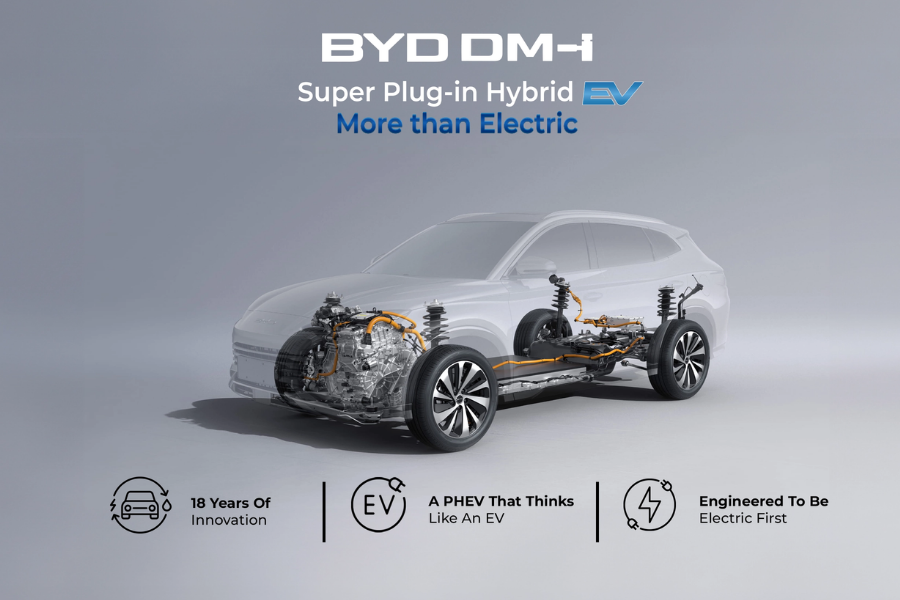
BYD DM-i Super Plug-in Hybrid EV Explained
- The term DM-i stands for Dual Motor Intelligence, which refers to BYD’s advanced plug-in hybrid technology.
- It combines both a battery-motor combination and a combustion engine to ensure higher efficiency, better performance and lower fuel consumption.
- That said, it comes with a 1.5-litre direct-injection turbocharged petrol engine, paired with dual electric motors and an 18.3kWh battery, which is claimed to offer a combined driving range of more than 1200 km.
- Unlike traditional hybrid systems in which the petrol engine acts as the primary power source and the battery provides assistance, BYD’s DM-i reverses this approach with an electric-first configuration, ensuring the vehicle runs primarily on battery power for most usage. However, when required, it automatically switches between multiple operating modes, like EV mode, HEV Series mode and HEV Parallel mode, to optimise performance and efficiency.
- EV Mode: Runs purely on electric mode. It is mainly used for daily commuting scenarios. In this mode, the vehicle can run up to 70km.
- HEV “Series” Mode: In this mode, the engine functions as a generator, charging the battery continuously while the electric motors power the wheels.
- HEV “Parallel” Mode: When high power is required, such as during overtaking or highway driving, the petrol engine kicks in and helps drive the wheels alongside the electric motors.
- Like EVs, this hybrid system also supports vehicle-to-load (V2L) charging capabilities. That said, you can power other electrical appliances using the powertrain.
- BYD claims the world’s best thermal efficiency of 43.04% for this hybrid powertrain.
Also Read: Big Savings on Tata EVs: Up To Rs 2.75 Lakh Off In June 2026
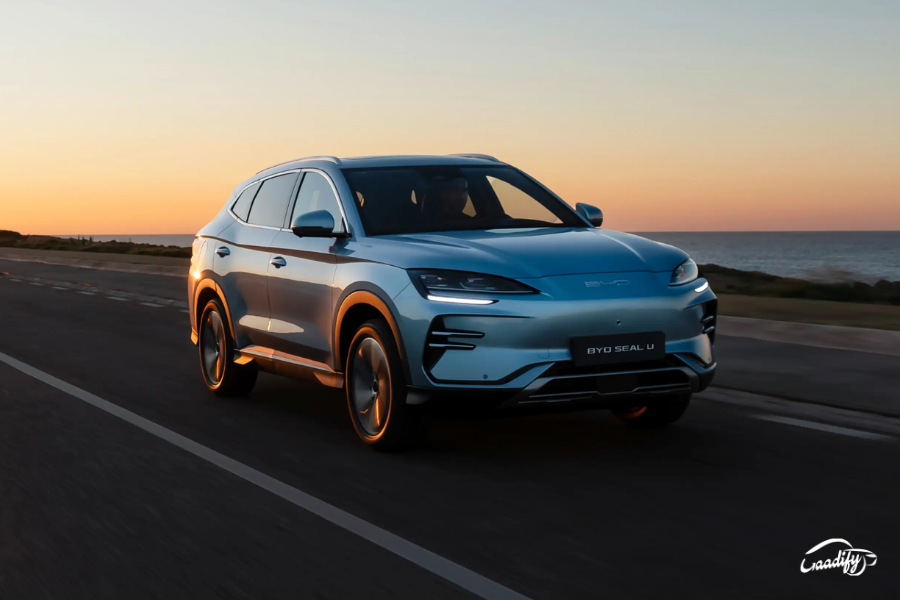
The Seal U, which is already on sale in global markets, is expected to benefit from this technology by offering an impressive balance between range and fuel economy. For Indian buyers, this could mean lower running costs along with reduced range anxiety, making it a practical alternative to both pure petrol and fully electric vehicles.