Monday, June 22, 2026

What Is CVT Transmission? And How Does It Work?

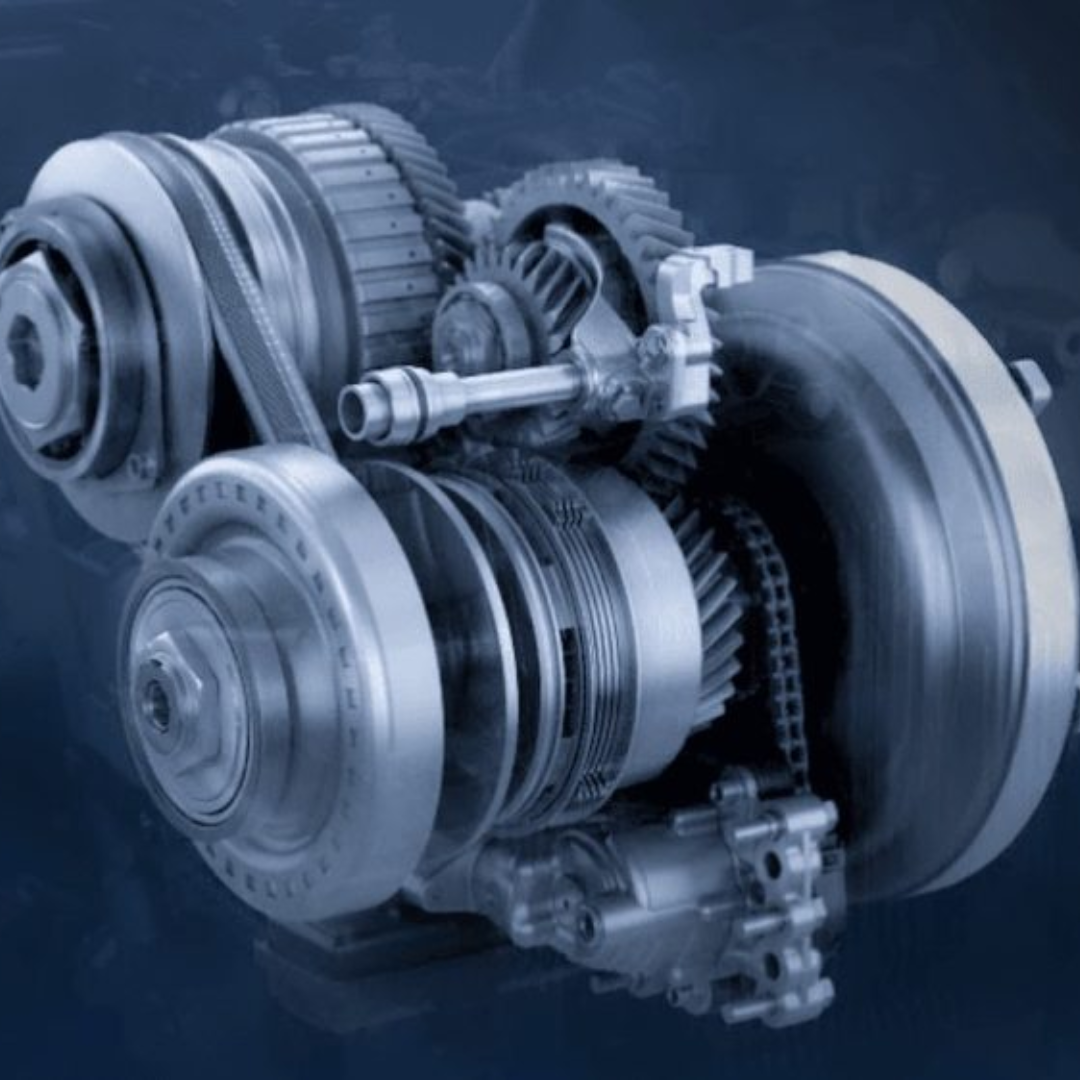
CVT or Continuously Variable Transmission is a very unique kind of automatic transmission, one where there’s no use of fixed gear ratios, but instead a belt and gears to indicate gear shifting.

CVT (Continuously Variable Transmission): How does it work?

Unlike conventional automatic gearboxes which have fixed gear ratios and actuators & sensors to engage them automatically, the CVT does not possess any gears, just a belt connected to two pulleys with variable diameters. One end of the pulley is connected to the crankshaft of the engine (driving/input pulley) and the other end of the pulley (driven/output pulley) is connected to the wheels/drive shaft, hence how the power delivery works.

During motion, the belts run slow and hence making the diameter of the pulleys small, and as speed increase and the belt moves faster thereby increasing the motion of the belt making the vehicle move faster. This adjustment of the driving pulleys is how the CVT continuously varies its gear ratios and the transmission of torque from engine to the wheels, hence how its name came to be.

Also Read: What Is Torque Converter Automatic Transmission? And How Does It Work?
Advantages of CVT:

  • No gear ratios means seamless up-shifts and downshifts with virtually zero lag.
  • Less power loss when compared to a conventional automatic transmission.
  • Greater fuel efficiency.
  • Lesser moving parts in comparison to other automatic transmissions so reduced maintenance and issues.
  • Perfect for city driving especially in jam packed metropolitan cities.

Disadvantages of CVT:

  • Power delivery is very linear so quick overtakes are not possible, best for light footed driving.
  • Not great for driving enthusiasts.
  • Steep increment of around Rs 1 lakh in cars over manual transmissions.

Car News

Save On Your Car Insurance Premium With These Tips

0
A recent debate over ICICI Lombard's stance on claims involving the use of E20 fuel in non-compliant vehicles has gained significant attention in recent...
Maruti Suzuki eVitara new price in June 2026

Maruti Suzuki Price Hike Announced; eVitara Takes The Biggest Hit

0
Maruti Suzuki has increased the prices of its lineup by up to Rs 30,000. The new prices came into effect on June 14, 2026....

India-UK FTA 2026 Details Out: What It Means For Luxury Car Prices In India

0
The much-awaited India-UK Free Trade Agreement (FTA) is set to come into force on July 15, 2026, and newly revealed details suggest it could...
E85 ethanol-blended petrol fuel price in Mumbai vs Delhi

E85 Fuel Launched In Mumbai At Rs 91.18/Litre

0
Earlier this year, the E85 blended petrol was launched in Delhi, and now the biofuel is officially available for sale in Mumbai at Rs...

Related Articles

MG Majestor vs Toyota Fortuner: Which SUV Should You Buy?

The MG Majestor is the latest entrant in the premium three-row SUV segment, a category largely dominated by the Toyota Fortuner. So, without any...

E85 Fuel Launched In Mumbai At Rs 91.18/Litre

Earlier this year, the E85 blended petrol was launched in Delhi, and now the biofuel is officially available for sale in Mumbai at Rs...

Tata Tiago EV 2026: City EV Buyer’s Complete Guide

Tata Tiago EV has recently gotten a facelift update, bringing a lot of cosmetic changes and new features. Priced from Rs 6.99 lakh (ex-showroom),...

Maruti Suzuki Price Hike Announced; eVitara Takes The Biggest Hit

Maruti Suzuki has increased the prices of its lineup by up to Rs 30,000. The new prices came into effect on June 14, 2026....

India-UK FTA 2026 Details Out: What It Means For Luxury Car Prices In India

The much-awaited India-UK Free Trade Agreement (FTA) is set to come into force on July 15, 2026, and newly revealed details suggest it could...